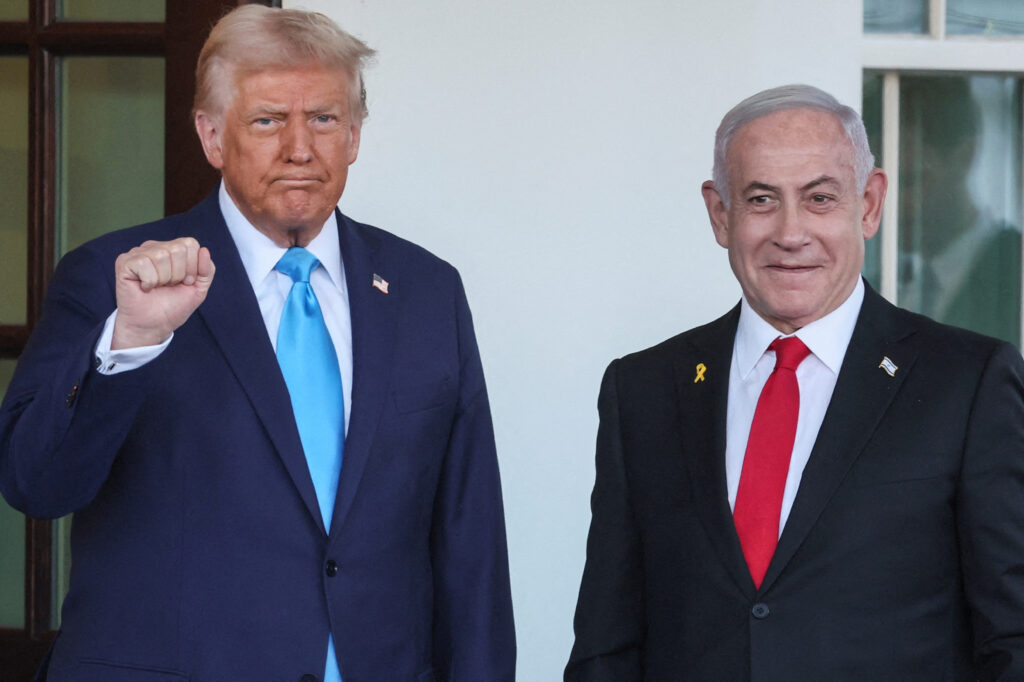
President Donald Trump’s latest foreign policy proposal has sparked intense debate: Should the U.S. take control of Gaza and rebuild it into the “Riviera of the Middle East”?
Proponents see it as an out-of-the-box solution to a long-standing humanitarian crisis. Critics call it imperialistic, unrealistic, and a potential escalation of conflict. With the region already on edge, does this proposal offer a path to peace or a recipe for disaster?
Trump’s Plan: A Radical Shift in Middle East Policy
The idea of turning Gaza into a prosperous economic hub under U.S. oversight is unlike anything proposed before. While past U.S. policies have centered on diplomacy, military aid, and sanctions, Trump’s vision redefines America’s role—from mediator to direct actor in Middle Eastern affairs.
🌍 A U.S.-Led Reconstruction Effort – The proposal envisions massive infrastructure projects to rebuild Gaza from its war-torn state into a thriving economy, potentially funded by American investment and international partnerships.
🏗️ A New Model for Peace? – Trump argues that economic development could stabilize Gaza, reducing extremism by providing jobs, security, and opportunity. The idea mirrors past efforts like the Marshall Plan, which rebuilt Europe after World War II.
🤝 Breaking Traditional Frameworks – This move challenges the conventional two-state solution framework, introducing a new paradigm where the U.S. takes an active governing role in the region.
The Criticism: Imperialism in Disguise?
While the proposal presents a radical alternative, it has been met with strong opposition from both U.S. lawmakers and international figures.
💥 A Violation of Palestinian Sovereignty – Critics argue that unilaterally placing Gaza under U.S. control disregards the rights of Palestinians, turning them into subjects rather than partners.
⚖️ Legal and Ethical Questions – The plan raises serious legal concerns about U.S. intervention in foreign governance, potentially violating international law and drawing backlash from the United Nations and human rights organizations.
📉 A Risk for U.S. Foreign Policy – Establishing direct control over a highly volatile region would expose the U.S. to greater security threats, requiring long-term military presence and diplomatic maneuvering.
The Humanitarian Factor: Can Gaza Be Saved?
Regardless of the political implications, Gaza’s humanitarian crisis remains dire. Any solution—whether led by the U.S. or international coalitions—must address the immediate needs of its people.
💔 A Region in Ruins – Years of conflict have left infrastructure decimated, with widespread poverty, limited access to clean water, and an unstable power grid. Any reconstruction effort will require decades of investment.
🛠️ The Challenge of Rebuilding – Even if funds are secured, who controls and executes reconstruction efforts? The presence of Hamas, historical resistance to foreign intervention, and logistical nightmares complicate any attempt at redevelopment.
Geopolitical Fallout: How the World is Reacting
Trump’s proposal has not only divided opinions domestically but also drawn strong reactions from key Middle Eastern nations.
🌐 Jordan, Egypt, and Gulf States Weigh In – Regional leaders have expressed skepticism, questioning whether U.S. intervention would truly lead to stability or simply inflame tensions.
⚔️ A Threat to Israeli-Palestinian Relations – While Israel has historically benefited from U.S. support, direct control over Gaza would reshape dynamics and potentially put the U.S. in direct confrontation with Israeli leadership.
💰 Who Pays for It? – The economic burden of rebuilding Gaza is enormous, and American taxpayers may not be eager to foot the bill. Without support from international allies or private investors, the plan could collapse under financial strain.
Final Thought: A Bold Plan with Uncertain Consequences
Whether viewed as visionary problem-solving or reckless overreach, Trump’s proposal forces a new conversation about Gaza’s future.
But is American-led reconstruction the right solution? And if not, what alternatives remain?
The coming months will determine whether this idea gains traction or is dismissed as yet another political spectacle in the ever-evolving landscape of Middle Eastern diplomacy.
Key Takeaways
✅ Trump’s proposal redefines America’s role in the Middle East, shifting from diplomacy to direct governance.
✅ Critics warn of U.S. imperialism, legal violations, and potential backlash from international allies.
✅ Gaza’s humanitarian crisis remains dire, requiring urgent solutions regardless of political disagreements.
✅ Regional reactions are mixed, with skepticism from key Middle Eastern nations and concerns over U.S. commitments.
✅ The feasibility of turning Gaza into an economic hub remains in question, given financial, logistical, and political hurdles.
💡 What do you think? Is this a radical but necessary approach, or an unworkable and dangerous precedent? Let’s discuss.



 alter your perspective
Leave a comment