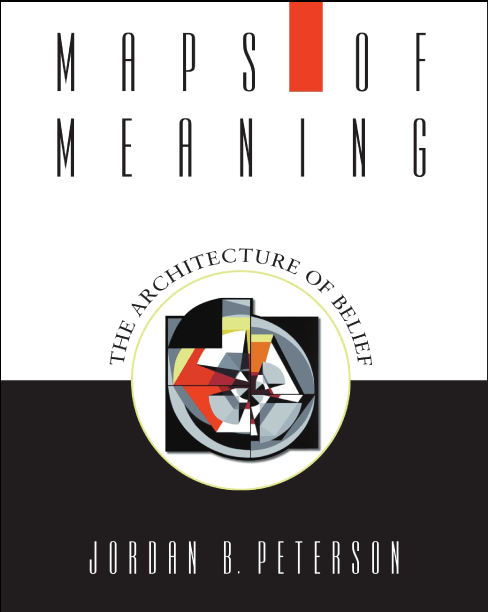
Jordan B. Peterson’s Maps of Meaning: The Architecture of Belief is not just a book—it’s a deep intellectual exploration of how myth, narrative, and belief systems shape human experience. Unlike conventional self-help or psychology books, Maps of Meaning blends psychology, religion, philosophy, and mythology into a framework that seeks to explain why humans need meaning, how they construct it, and what happens when it collapses.
It’s a challenging read, both in terms of content and complexity, but for those willing to engage, it provides profound insights into personal development, cultural dynamics, and the eternal battle between chaos and order.
What the Book is About
Peterson argues that human beings organize their world through narrative structures, using myths, religions, and cultural traditions as maps of meaning that guide them through life’s uncertainties. He explains how these frameworks:
📖 Protect individuals from chaos by offering a structured way of interpreting the world.
🌌 Use mythical narratives to convey profound truths about human nature and society.
🔮 Define responses to the unknown, whether through fear, exploration, or transformation.
⚖️ Establish moral and ethical guidelines, shaping how people act and make decisions.
🧩 Manifest as archetypes, such as the hero, the trickster, and the villain, which appear across cultures.
🔄 Enable transformation, as individuals must navigate through chaos to restore order and meaning.
Peterson draws from Carl Jung, Friedrich Nietzsche, Sigmund Freud, and religious traditions to support his ideas, creating a philosophical and psychological roadmap for understanding how meaning operates at both personal and societal levels.
Key Themes and Insights
🎭 Culture and Identity: The Role of Belief Systems
One of the book’s central ideas is that cultural belief systems shape personal identity. From childhood, individuals absorb the narratives, values, and traditions of their society, which provide a sense of belonging and security. However, when different belief systems collide—whether through ideological conflict or cultural shifts—individuals experience existential crises and moral confusion.
🔹 Takeaway: Understanding why people cling to certain beliefs is crucial for navigating personal identity struggles and societal polarization.
🌪️ Chaos vs. Order: The Constant Struggle
Peterson frames existence as a battle between order and chaos. While order provides stability, it can become rigid and oppressive; chaos, on the other hand, is terrifying but necessary for growth and transformation.
🔹 Takeaway: True personal development comes from stepping into the unknown, confronting chaos, and integrating new knowledge—a process echoed in the hero’s journey found in myths and religions.
🔍 Why Meaning is Crucial for Psychological Well-Being
One of the book’s most compelling arguments is that a lack of meaning leads to psychological distress. People who lose faith in their belief systems, traditions, or personal goals often fall into nihilism, anxiety, and existential despair.
🔹 Takeaway: Building meaning—through discipline, responsibility, and storytelling—is essential for maintaining mental health and motivation.
🕊️ The Double-Edged Nature of Belief Systems
While belief systems protect individuals from existential uncertainty, they can also become dogmatic and restrictive. Peterson warns that ideological possession, where individuals become trapped in rigid worldviews, can lead to extremism and social conflict.
🔹 Takeaway: Healthy belief systems allow for both stability and adaptability—they should guide but not control.
⚔️ Confronting Evil and Suffering
Peterson explores the nature of evil, particularly how individuals and societies commit atrocities when they become ideologically possessed or reject moral responsibility. Drawing from historical examples like totalitarian regimes, he argues that understanding how evil manifests is crucial to preventing it.
🔹 Takeaway: Confronting personal flaws and societal failures is necessary for maintaining justice and ethical responsibility.
🌱 The Hero’s Journey: A Universal Path to Growth
At the heart of Maps of Meaning is the hero’s journey—a narrative pattern where individuals leave the familiar, confront challenges, and emerge transformed. Whether in religion, mythology, or personal experiences, this journey represents the process of self-discovery, courage, and meaning-making.
🔹 Takeaway: Every individual must face chaos, embrace struggle, and emerge stronger—this is the foundation of both personal growth and societal evolution.
Strengths of the Book
✅ Profound and Thought-Provoking – Peterson weaves together history, psychology, mythology, and philosophy to offer a compelling framework for understanding meaning.
✅ Addresses Big Questions – The book explores why humans need purpose, how beliefs are formed, and what happens when societal structures break down.
✅ Balances Theory and Personal Experience – Peterson integrates his own experiences and struggles, making the abstract concepts relatable and applicable.
✅ Explains Cultural and Political Conflicts – The book provides insights into why ideological battles occur, helping readers understand modern societal tensions.
Challenges of the Book
❌ Dense and Theoretical – The book is academically rigorous and heavy on philosophical and psychological references, making it a challenging read.
❌ Not for Casual Readers – Unlike 12 Rules for Life, which is more accessible, Maps of Meaning is written for deep intellectual exploration rather than quick self-help solutions.
❌ Some Arguments Are Repetitive – Certain ideas are revisited multiple times, making the book feel long-winded in sections.
Who Should Read This Book?
📌 Intellectuals and Deep Thinkers – If you enjoy philosophy, psychology, and cultural analysis, this book offers a wealth of insights.
📌 People Seeking Meaning in Life – If you struggle with existential questions, Peterson’s framework provides a structured way to explore purpose and belief.
📌 Those Interested in Mythology and Religion – The book offers a unique psychological perspective on religious narratives and their impact on society.
📌 Anyone Trying to Understand Cultural Conflicts – If you want to understand why people defend their ideologies so strongly, Maps of Meaning provides a compelling explanation.
Final Thoughts: Is Maps of Meaning Worth Reading?
Yes—but with a caveat.
Maps of Meaning is not a casual read. It is dense, complex, and requires intellectual engagement. However, for those who commit to it, the book offers one of the most profound explorations of belief systems, meaning, and human psychology available today.
It challenges readers to rethink how they see the world, their beliefs, and their place in the broader human narrative.
For those willing to invest the time and effort, Maps of Meaning is a rewarding, thought-provoking, and transformative book that will stay with you long after you turn the final page.
Key Takeaways
✅ Belief systems help individuals and societies navigate chaos and uncertainty.
✅ Myths and narratives encode deep psychological and moral truths.
✅ Personal growth requires confronting chaos, embracing responsibility, and overcoming struggle.
✅ Rigid ideologies can be dangerous—balance between order and adaptability is key.
✅ Understanding the hero’s journey provides a roadmap for transformation and meaning-making.
💡 Would you read Maps of Meaning? Do you think belief systems are essential, or do they limit personal freedom? Let’s discuss.


 alter your perspective
Leave a comment