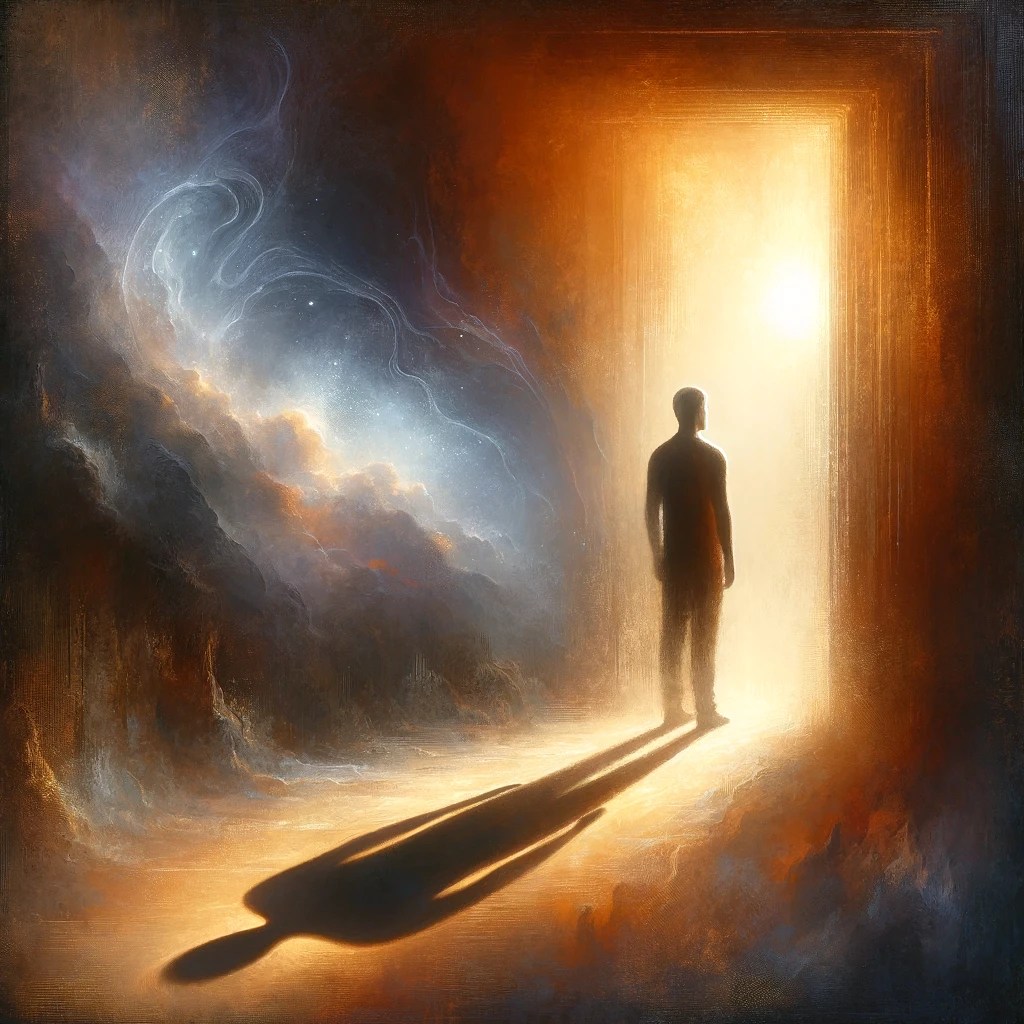
The journey of self-discovery is often framed as a pursuit of light, virtue, and self-improvement, yet Jungian analyst Robert A. Johnson argues that true fulfillment requires acknowledging and integrating the darker aspects of ourselves—our shadow.
Far from being a repository of evil, the shadow represents repressed traits, hidden potential, and the aspects of our psyche that society deems unacceptable. Through personal experiences, spiritual insights, and Jungian philosophy, Johnson explores how embracing the paradox of existence—the coexistence of light and dark—leads to true wholeness and self-liberation.
By understanding the role of the shadow, confronting personal and societal conditioning, and integrating the unconscious, we can unlock greater vitality, authenticity, and inner peace.
The Shadow: Misunderstood and Essential
🕊️ The Shadow as an Integral Part of the Psyche
In contrast to common misconceptions that equate the shadow with evil or destructive impulses, Johnson presents it as an essential aspect of our complete identity.
- The shadow consists of all the traits we deny, repress, or disown—not because they are inherently bad, but because they don’t align with societal expectations.
- Suppressing the shadow creates inner conflict, leading to mood swings, projection onto others, and unconscious self-sabotage.
- Integrating the shadow restores balance, allowing for a fuller, more authentic expression of self.
Rather than something to fear, the shadow is a wellspring of strength, creativity, and self-knowledge—but only if we have the courage to face it.
⚖️ The Seesaw Analogy: Balance Between Ego and Shadow
Johnson uses the seesaw metaphor to illustrate psychic equilibrium. When we over-identify with one aspect of ourselves (our socially acceptable traits), the shadow builds tension in the unconscious, leading to instability.
- A person who is excessively virtuous may repress their assertiveness, only for it to manifest later as passive-aggression or resentment.
- Someone who suppresses their playful, spontaneous nature may experience burnout and emotional rigidity.
- Ignoring the shadow creates an artificial sense of goodness, but true psychological health requires acknowledging our inner contradictions and complexities.
The Power of Shadow Integration
💪 Hidden Strength Within the Shadow
Johnson reframes the shadow as a source of untapped potential. Many of the qualities we admire—courage, resilience, assertiveness, creativity—exist within the shadow, waiting to be acknowledged.
- Carl Jung famously said, “The gold is in the dark.” The qualities we suppress may be the very traits that can empower us.
- Integration of the shadow prevents unconscious projection, where we see in others what we refuse to recognize in ourselves.
- By embracing both our light and dark aspects, we gain energy, authenticity, and a deeper connection with our true nature.
The goal is not perfection but wholeness—a full acceptance of self without shame or repression.
🔄 The Paradox of Good and Evil
One of Johnson’s key insights is the necessity of paradox—understanding that light and dark are not opposing forces, but two halves of the same whole.
- Society encourages a one-sided pursuit of virtue, rejecting imperfection, anger, or doubt.
- However, rejecting one half of the psyche creates psychological imbalance, leading to internal conflict.
- True wisdom lies in embracing both polarities—accepting that we are neither wholly good nor wholly bad, but a combination of both.
The paradox of existence is that our greatest growth often comes from our struggles, our wounds, and our contradictions.
Cultural and Spiritual Dimensions of Shadow Work
🌌 How Society Shapes Our Shadow
Cultural norms dictate which traits are acceptable and which are repressed, shaping the shadow from an early age.
- Men may repress vulnerability, believing it to be weak.
- Women may suppress their ambition, fearing it will make them unlikable.
- Religious and moral teachings may create unrealistic expectations of purity, pushing natural instincts into the unconscious.
Understanding this conditioning allows individuals to reclaim lost parts of themselves and resist societal pressures that limit self-expression.
🌈 The Mandorla: Symbol of Wholeness
Johnson uses the Mandorla (the almond-shaped intersection of two circles) as a symbol of integration.
- The two circles represent opposites (light/dark, conscious/unconscious, good/evil).
- The overlapping center represents wholeness—the union of paradoxes.
- Living in the Mandorla means embracing both aspects of the self, rather than rejecting one in favor of the other.
This concept aligns with Jung’s individuation process, in which a person integrates all aspects of their psyche to become a fully realized individual.
Key Takeaways
- 🌌 Inner Work is Essential – True fulfillment comes from exploring within, rather than external validation.
- 🕊️ The Shadow is Not Evil – It contains repressed strengths, creativity, and potential waiting to be integrated.
- ⚖️ Psychic Balance Requires Shadow Integration – Ignoring the shadow leads to internal conflict and projection.
- 💡 Paradox is the Key to Wholeness – Accepting both light and dark allows for greater authenticity and self-awareness.
- 🌱 Societal Norms Shape the Shadow – Recognizing cultural conditioning helps individuals reclaim their full identity.
- 🌀 The Mandorla Represents Reconciliation – True wisdom lies in holding opposing truths together, rather than choosing one over the other.
The Bigger Picture
Robert A. Johnson’s teachings serve as a powerful reminder that personal growth is not about eliminating imperfection, but embracing it. We do not become whole by rejecting our flaws, but by integrating them into a deeper understanding of self.
Shadow work is not about indulging in darkness, nor is it about moral relativism—it is about reclaiming the parts of ourselves that make us truly alive.
By courageously confronting our fears, embracing paradox, and recognizing our hidden strengths, we can move toward a life of greater depth, energy, and inner peace.
Ultimately, the journey to wholeness is not about becoming someone else—it is about becoming fully, unapologetically ourselves. 🌑✨


 alter your perspective
Leave a comment