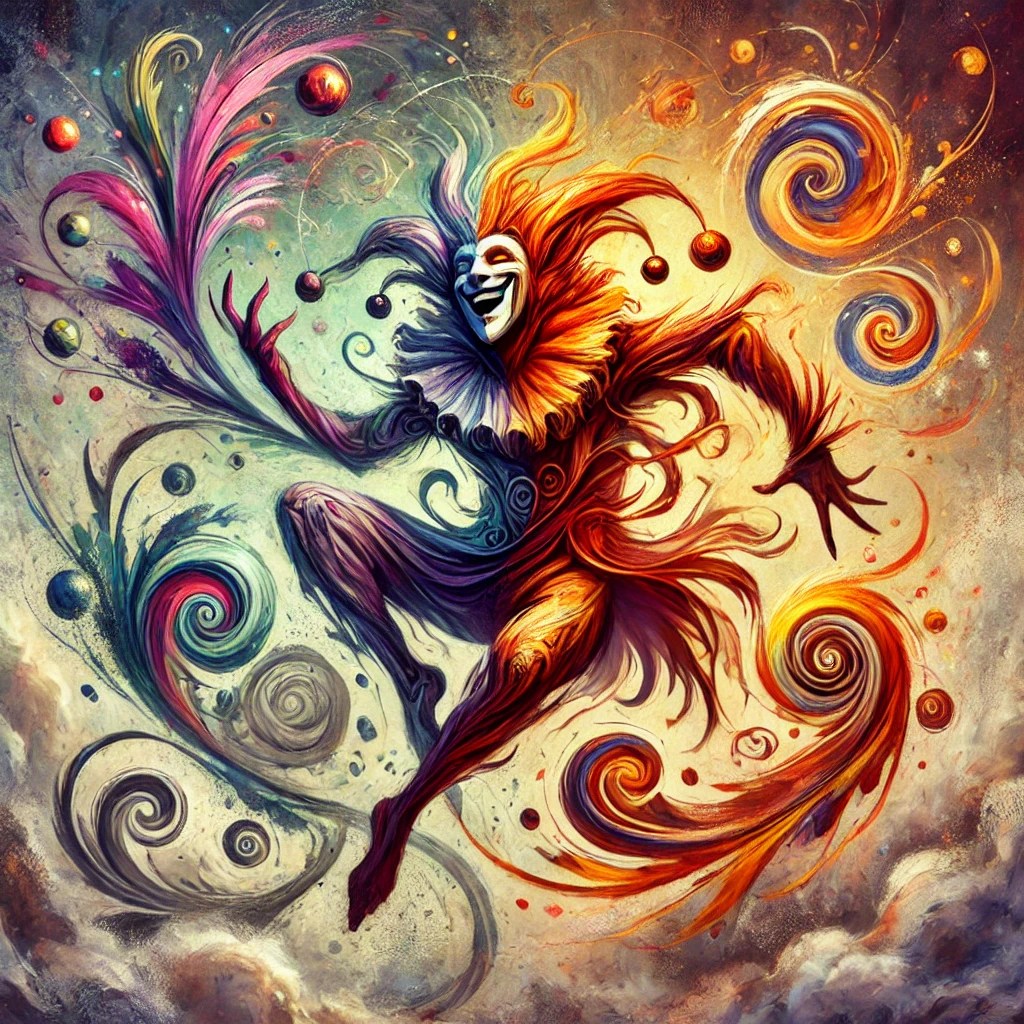
The trickster archetype is one of the most enduring and provocative figures in mythology, literature, and psychology. Unlike the fool, who is naive and self-defeating, the trickster is cunning, subversive, and unpredictable. This figure exists between worlds—order and chaos, truth and deception, creation and destruction—constantly challenging societal norms.
From mythological deities to literary antiheroes, the trickster serves as a catalyst for transformation, forcing individuals and cultures to reevaluate their beliefs and embrace change. By exploring the trickster’s role in cultural evolution, psychological growth, and self-awareness, we uncover its importance in shaping both personal identity and societal progress.
The Trickster’s Role in Culture and Mythology
🎭 Trickster vs. Fool: The Key Distinction
While both the fool and the trickster operate outside societal norms, their motives and methods differ:
- The fool is often oblivious to the consequences of their actions, embodying innocence and self-destruction.
- The trickster is highly aware, using deception, humor, and wit to disrupt order and expose deeper truths.
This distinction makes the trickster a powerful figure of transformation, revealing the absurdity of rigid structures and the necessity of adaptability.
🚧 Agent of Disruption and Change
The trickster archetype thrives on disrupting order—not to cause destruction, but to force evolution. Trickster figures exist across cultures:
- Loki (Norse Mythology) – A chaotic figure who both helps and hinders the gods, blurring the line between hero and villain.
- Hermes (Greek Mythology) – A trickster god of communication and cunning, guiding souls between the worlds of the living and the dead.
- Anansi (West African Folklore) – A spider trickster who uses wit to outmaneuver stronger opponents, teaching lessons about intelligence over brute strength.
- Coyote (Native American Mythology) – A shapeshifter and troublemaker who teaches lessons through trickery and chaos.
These figures test the boundaries of rules and traditions, forcing individuals and societies to question their assumptions and embrace new possibilities.
The Trickster as a Mirror to the Human Psyche
⚖️ The Balance of Dualities: Order and Chaos
The trickster embodies the tension between opposites, existing in liminal spaces—where boundaries blur, and new possibilities emerge.
- Too much order leads to stagnation—societies become rigid, lacking innovation.
- Too much chaos leads to destruction—without structure, civilizations crumble.
The trickster keeps both forces in balance, reminding us that life is fluid, not static. True wisdom lies in accepting contradiction and navigating uncertainty with creativity and adaptability.
🤔 The Trickster as a Catalyst for Self-Reflection
Tricksters challenge not just society but individual identity. They force people to confront:
- The masks they wear.
- The illusions they believe.
- The fears they avoid.
By playing with deception and paradox, the trickster reveals uncomfortable truths, leading to self-awareness and transformation.
Laughter, Absurdity, and the Trickster’s Role in Psychology
🤡 Laughter as a Tool for Awakening
As Nietzsche observed, laughter bridges the sacred and the profane. Tricksters use humor to expose hypocrisy, arrogance, and the absurdity of rigid belief systems.
- Satirical tricksters (like Shakespeare’s Puck or modern comedians) reveal truths that serious discourse often avoids.
- Self-deprecating humor allows individuals to confront their own contradictions without shame.
- The trickster’s humor softens the blow of hard truths, making transformation more accessible.
Laughter, then, becomes a tool of enlightenment—allowing us to engage with difficult realities through playfulness and absurdity.
The Trickster in Personal Growth: Integration of the Shadow
🌌 The Trickster as a Shadow Figure
In Jungian psychology, the shadow represents the repressed aspects of the self—qualities society deems unacceptable, dangerous, or immoral.
- The trickster embodies the collective shadow, confronting society with its hidden fears and suppressed desires.
- Engaging with the trickster within allows individuals to break free from rigid identities and embrace their full complexity.
- Avoiding the trickster leads to stagnation and repression, while integrating it fosters self-awareness and authenticity.
🔄 Creative Destruction and Rebirth
Tricksters do not just tear down; they also pave the way for renewal. Their chaos is not pointless—it is creative destruction.
- Artists, innovators, and rebels embody trickster energy, dismantling outdated norms to make way for new ideas.
- Moments of crisis often require trickster-like adaptability, forcing people to think differently, break rules, and create anew.
- True growth requires risk-taking, and the trickster teaches the value of breaking free from limitations.
By integrating trickster energy, individuals develop greater resilience, creativity, and self-liberation.
Key Takeaways
- 🎭 The trickster is cunning, adaptable, and subversive, challenging societal and personal illusions.
- 🚧 Tricksters force change, disrupting rigid structures to create space for new ideas.
- 🤡 Laughter is a tool for awakening, exposing truths in a way that disarms fear and resistance.
- ⚖️ The trickster navigates dualities, balancing order and chaos, creation and destruction.
- 🔄 Personal transformation requires engaging with the trickster within, confronting fears and embracing flexibility and playfulness.
- 🌌 Tricksters connect to the divine, serving as mediators between different realms of thought, belief, and identity.
The Bigger Picture: Why the Trickster Matters Today
In an era of polarized thinking, rigid ideologies, and rapid change, the trickster archetype is more relevant than ever.
- Political satire, internet culture, and artistic rebellion all contain trickster elements, exposing corruption and pushing boundaries.
- Psychologically, individuals who embrace trickster energy can navigate uncertainty with greater resilience and creativity.
- On a collective level, tricksters challenge outdated systems, paving the way for innovation and cultural renewal.
By understanding the role of the trickster in both personal and societal evolution, we learn to embrace transformation, question assumptions, and move forward with a sense of curiosity, humor, and adaptability.
In the end, the trickster reminds us that nothing is fixed—not identity, not beliefs, not reality itself. To laugh at life’s absurdity, embrace paradox, and remain open to change is to honor the trickster within us all. 🎭✨


 alter your perspective
Leave a comment