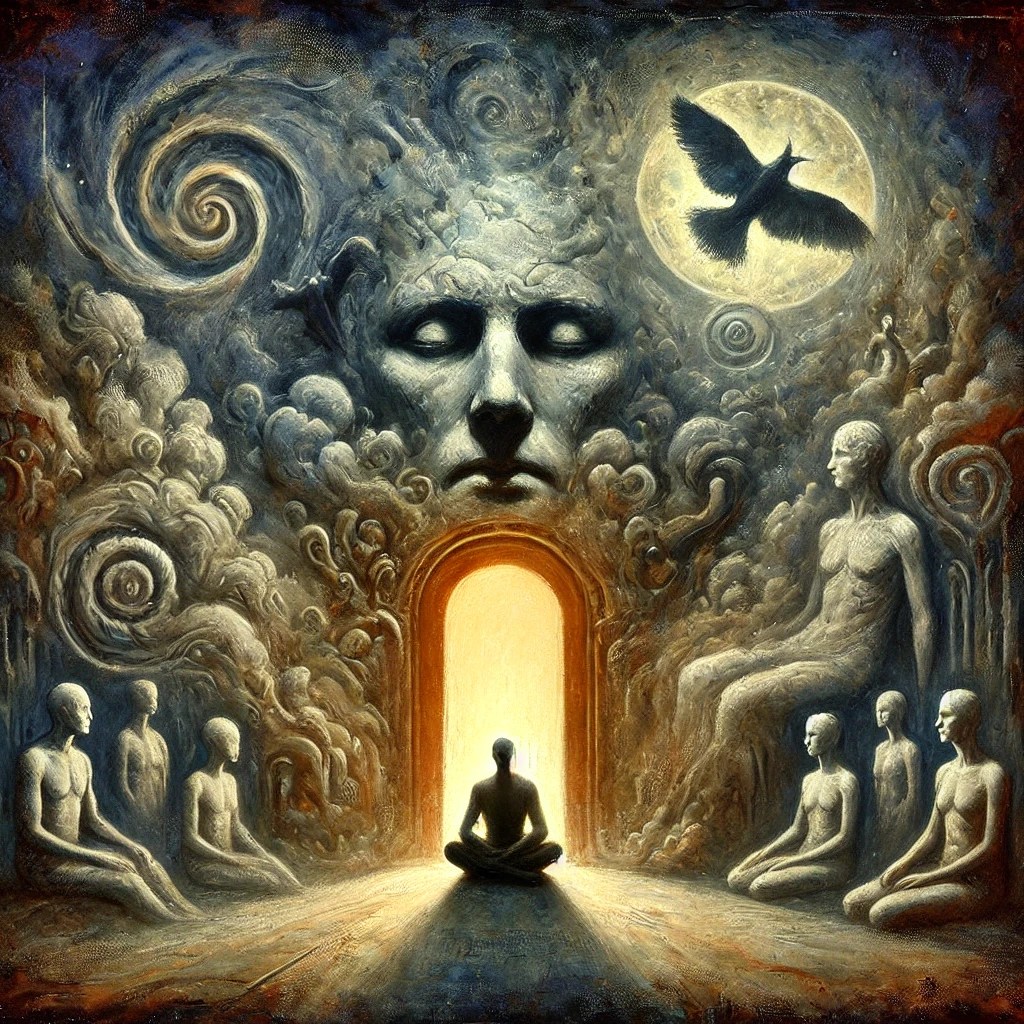
Carl Jung’s Active Imagination is a profound psychological technique designed to bridge the conscious and unconscious mind, fostering self-discovery, healing, and transformation. Unlike dreams, which unfold passively, Active Imagination invites the individual to engage in a conscious dialogue with archetypal figures, internal conflicts, and symbolic imagery residing in the psyche.
Jung saw this process as a crucial tool in the individuation journey—the lifelong integration of the various aspects of the self into a cohesive whole. By interacting with inner voices and visions in a structured manner, individuals can unlock suppressed emotions, uncover hidden potentials, and establish a deeper connection with their authentic selves.
Through an exploration of Jung’s own experiences, practical guidelines, and the psychological significance of this method, this analysis sheds light on why Active Imagination remains one of the most powerful tools for personal transformation.
Active Imagination: A Gateway to Self-Discovery
🧠 What Is Active Imagination?
Active Imagination is a structured way of engaging with the unconscious, where the conscious mind interacts with the images, symbols, and voices of the deeper psyche. Unlike passive dreaming, this technique:
- Encourages dialogue with inner figures.
- Brings unconscious material into awareness.
- Fosters integration of suppressed emotions and conflicts.
Through visualization, journaling, or even artistic expression, practitioners of Active Imagination can translate abstract unconscious material into meaningful insight.
🌌 Dialogue with the Unconscious
A core feature of Active Imagination is engaging in conversations with inner figures—whether they appear as:
- Archetypal guides (wise old man, shadow figures, anima/animus).
- Past memories or forgotten aspects of the self.
- Personified fears, desires, or symbolic images.
By treating these encounters with respect and curiosity, one can gain clarity, resolve inner conflicts, and even access creative inspiration.
Jung’s Own Journey with Active Imagination
🎨 The Red Book: A Testament to Inner Work
Jung’s Red Book is a vivid account of his personal engagement with Active Imagination during a psychologically turbulent time. In it, he recorded his dialogues with inner figures, transforming his visions into symbolic narratives and artwork.
Key aspects of Jung’s process included:
- Recording his experiences in writing and illustrations.
- Allowing unconscious imagery to unfold without suppression.
- Reflecting on the meaning and integrating insights into daily life.
Jung’s own experiences serve as a model for those seeking to deepen their self-awareness through similar practices.
How to Practice Active Imagination
✍️ Recording the Process
One of the most important steps in Active Imagination is keeping a record of the experiences:
- Write down dialogues, images, or emotions that arise.
- Sketch or paint symbols that emerge.
- Revisit journal entries to track recurring themes.
Recording provides clarity, continuity, and a reference for deeper reflection.
🚪 Creating a Safe Environment
To engage in Active Imagination effectively, one should:
- Find a quiet space free from distractions.
- Set an intention before beginning.
- Remain open but maintain a sense of conscious awareness.
Since unconscious material can be intense, it’s crucial to approach this practice with mindfulness and emotional stability.
🌿 Integration Through Rituals
To ensure that insights from Active Imagination become a part of daily life, rituals can be used:
- Lighting a candle before and after the session.
- Creating artwork or poetry inspired by the experience.
- Developing affirmations or reflections based on the dialogue.
Rituals help ground abstract insights into tangible reality, reinforcing personal growth.
Psychological Significance of Active Imagination
🎭 Interacting with Archetypes
Jung proposed that Active Imagination allows individuals to consciously engage with the collective unconscious, where archetypal figures reside. These encounters can:
- Reveal hidden strengths or wounds.
- Provide wisdom from symbolic guides.
- Challenge limiting beliefs and outdated self-perceptions.
Through this process, one can understand and integrate different aspects of the self, achieving greater psychological wholeness.
⚖️ Balancing the Psyche: Ethical Considerations
Since the unconscious holds both creative and destructive forces, Active Imagination must be approached responsibly:
- The conscious mind must serve as a mediator.
- Encounters with negative or shadow elements should be acknowledged, but not obeyed blindly.
- Balance between surrender and control is key.
Practicing Active Imagination with ethical self-awareness ensures that one does not become overwhelmed by unconscious material.
🌊 The Autonomy of Inner Figures
One of Jung’s most unsettling yet profound realizations was that the inner figures encountered in Active Imagination are not mere projections but have a life of their own.
- These figures respond unpredictably.
- They may challenge the ego’s assumptions.
- Some may offer wisdom, while others expose inner resistance.
Recognizing their autonomy forces the practitioner to develop humility and curiosity, leading to deeper engagement with the self.
Key Takeaways
- 🧘 Active Imagination is a structured way to access the unconscious mind, allowing for deeper self-awareness and emotional integration.
- 🌌 Engaging in dialogue with inner figures can reveal hidden strengths, challenges, and creative insights.
- ✍️ Keeping a record of experiences helps process and reflect on unconscious material.
- 🚪 Creating a safe and mindful environment ensures a constructive experience.
- 🎭 Interacting with archetypes can unlock profound psychological insights, leading to greater self-integration.
- 🔄 Integrating the experience into daily life through rituals grounds insights into reality.
- 🌊 Inner figures have autonomy, requiring a respectful and ethical approach to the practice.
The Transformative Power of Active Imagination
Jung considered Active Imagination to be one of the most powerful tools for psychological transformation, as it provides direct access to the unconscious mind while maintaining conscious engagement.
Through regular practice, individuals can:
- Heal unresolved conflicts.
- Discover deeper creative potential.
- Achieve greater psychological balance and wholeness.
In a world where external distractions often drown out the inner voice, Active Imagination serves as a bridge to the deeper self, guiding individuals toward a life of greater authenticity, creativity, and wisdom.
By embracing this practice with courage and respect, one embarks on a journey into the depths of the psyche, unlocking the hidden treasures of the soul. 🌌✨


 alter your perspective
Leave a comment