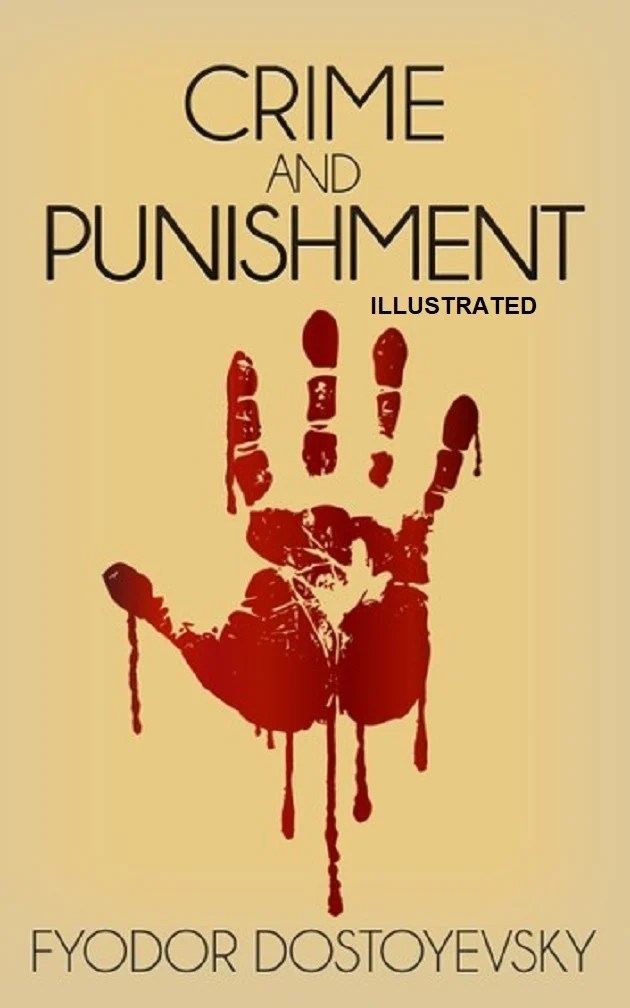
Few works in literature have examined guilt, morality, and the human psyche as deeply as Fyodor Dostoevsky’s Crime and Punishment. Published in 1866, the novel offers an unflinching portrayal of existential struggle, focusing on Raskolnikov, a young intellectual who justifies murder in the pursuit of greatness—only to be consumed by guilt and inner turmoil.
Through its psychological depth, philosophical debates, and rich literary symbolism, the novel explores themes of redemption, suffering, and the tension between free will and moral law. Dostoevsky’s masterful narrative places readers inside Raskolnikov’s fractured mind, challenging them to consider the limits of reason, the necessity of human connection, and the inescapable burden of conscience.
The Struggle Between Freedom and Moral Responsibility
⚖️ The Justification of Crime
At the novel’s core is Raskolnikov’s belief in rational egoism, the idea that some individuals—those deemed “extraordinary”—are beyond conventional morality. Inspired by figures like Napoleon, he argues that great men must break societal laws to achieve higher purposes.
This philosophy leads him to murder an old pawnbroker, whom he sees as a parasite. But rather than feeling liberated, Raskolnikov is tormented by guilt and paranoia. His descent into psychological agony suggests that:
- True greatness does not stem from lawlessness, but from moral responsibility.
- The burden of conscience is inescapable, even for those who believe they act rationally.
- No crime exists in isolation—every transgression affects both the individual and society.
Dostoevsky thus debunks the notion of the “superman” (a theme later echoed by Nietzsche), arguing that no one can escape the weight of morality.
🧠 Psychological Torture and the Fear of Punishment
While Raskolnikov initially sees himself as a great thinker capable of rising above moral constraints, his inner torment reveals the limitations of human rationality.
His mental deterioration follows a pattern:
- Paranoia: He fears discovery even when no one suspects him.
- Detachment: He isolates himself, unable to find peace.
- Physical and emotional decline: His suffering manifests in illness and hallucinations.
His descent highlights Dostoevsky’s belief that no crime goes unpunished—not by the law, but by one’s own conscience. Even when external punishment is absent, moral reckoning is inevitable.
Svidrigailov: A Foil to Raskolnikov’s Struggle
🔍 Two Paths of Despair
Dostoevsky presents Svidrigailov as a contrasting figure, one who also lives outside moral law but embraces hedonism instead of guilt. Both men believe in free will unchecked by morality, yet their fates diverge:
- Svidrigailov indulges in pleasure but ultimately finds life meaningless, leading to his suicide.
- Raskolnikov, despite resisting at first, ultimately seeks redemption through suffering.
Through this contrast, Dostoevsky suggests that a life without moral anchors leads either to self-destruction or to renewal through suffering.
The Role of Suffering in Redemption
📜 Dostoevsky’s Philosophy of Atonement
A recurring theme in Crime and Punishment is the redemptive power of suffering. Raskolnikov believes he can escape punishment, but his conscience drives him toward confession. Through his suffering, he:
- Acknowledges his human limitations.
- Recognizes the need for love and connection.
- Begins his journey toward redemption.
Dostoevsky presents suffering as a path to moral and spiritual renewal, arguing that:
- Avoiding suffering leads to greater despair (as seen in Svidrigailov).
- Enduring suffering with humility can restore the soul (as seen in Raskolnikov’s arc).
Through Raskolnikov’s confession and eventual exile, the novel suggests that true freedom is not found in crime or defiance, but in accepting responsibility and seeking redemption.
Bakhtin’s Concept of Carnival: Crowning and Decrowning in Dostoevsky’s Narrative
🎭 Reversal of Power and Social Hierarchies
Mikhail Bakhtin’s idea of carnival is key to understanding Crime and Punishment. In carnival culture, figures of authority are temporarily “crowned” as kings, only to be mocked and overthrown.
Raskolnikov’s story follows a similar arc:
- He “crowns” himself as an extraordinary man, believing he has the right to kill.
- He is “decrowned” by his own conscience, realizing he is no greater than any other man.
- Through suffering, he is spiritually reborn, shedding his arrogance.
This rise and fall dynamic reflects a deep existential truth: human beings who elevate themselves too high must inevitably face humiliation and reckoning.
Narrative and Psychological Complexity in Dostoevsky’s Style
✍️ A Deep Dive into the Human Psyche
Dostoevsky’s writing is not just philosophical but intensely psychological. His use of:
- Stream-of-consciousness narration places readers inside Raskolnikov’s mind, making his paranoia and confusion visceral.
- Dialogue-driven storytelling creates tension, as characters grapple with existential and moral dilemmas in real time.
- Symbolism and foreshadowing enrich the narrative, reinforcing themes of death, rebirth, and fate.
Unlike traditional novels that impose clear moral lessons, Crime and Punishment immerses readers in uncertainty, mirroring the real struggles of human decision-making.
Key Takeaways from Crime and Punishment
- ⚖️ The Limits of Rational Egoism: Human beings are not purely rational, and attempts to justify immorality through logic will ultimately fail.
- 🧠 The Burden of Conscience: No crime is without consequence; psychological suffering is often worse than legal punishment.
- 🔄 Freedom vs. Responsibility: Dostoevsky rejects moral relativism, arguing that true freedom requires moral accountability.
- 💔 Suffering as Redemption: Pain and humility are necessary for personal transformation.
- 🎭 The Rise and Fall of the “Great Man”: Those who place themselves above moral law inevitably collapse under the weight of their own arrogance.
Why Crime and Punishment Remains Relevant Today
Dostoevsky’s exploration of guilt, free will, and the morality of power resonates as deeply today as it did in 1866. In an age where:
- Rational justifications are used for unethical behavior,
- People struggle with alienation and self-doubt,
- Society debates free will vs. determinism,
Crime and Punishment remains a timeless reflection on the human condition. It forces readers to ask:
🔹 Do we create our own morality, or are we bound by something greater?
🔹 Is true freedom found in defiance—or in responsibility?
🔹 Can suffering be the path to redemption, or is it merely punishment?
Dostoevsky leaves no easy answers, only deep, haunting questions that linger long after the final page.


 alter your perspective
Leave a comment