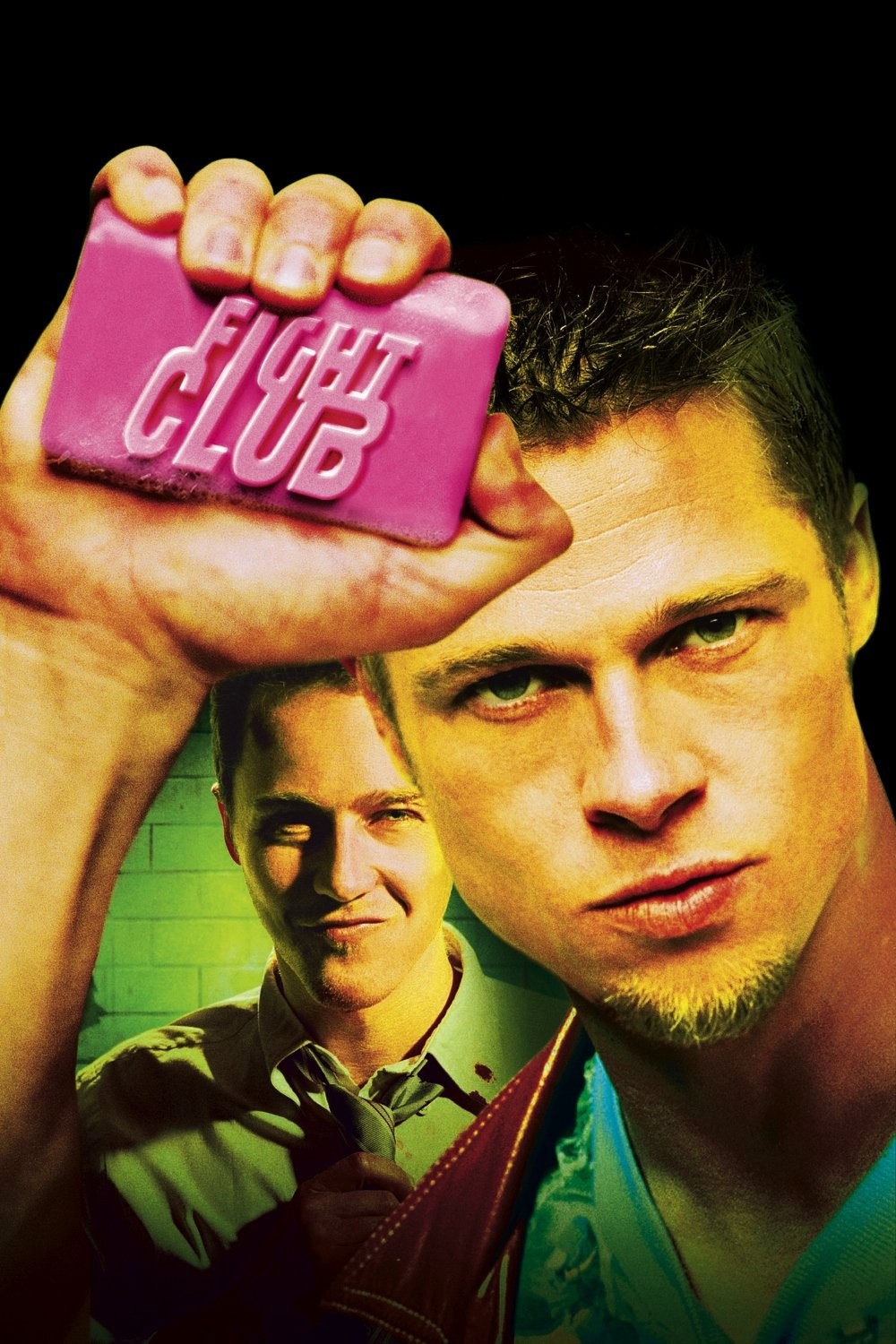
Chuck Palahniuk’s Fight Club is a raw and subversive critique of modern masculinity, consumer culture, and personal identity. Through its gritty, anarchistic narrative, the novel explores self-destruction as a means of self-discovery, forcing both its protagonist and readers to confront the emptiness of modern life.
The story follows an unnamed narrator, a disillusioned corporate worker who forms an underground fight club with the enigmatic Tyler Durden. As their movement spirals into violent anarchy, the protagonist wrestles with his own fractured psyche, leading to shocking revelations about identity, freedom, and the price of rebellion.
The Unraveling of Modern Man
🛋️ The Trap of Consumerism
At the novel’s start, the narrator is trapped in a meaningless cycle of consumption, obsessed with filling his life with material goods from IKEA catalogs. He believes possessions define self-worth, reflecting a larger societal illusion that consumer goods equate to happiness.
Tyler Durden disrupts this illusion, rejecting the comforts of modern life in favor of raw experience, pain, and chaos. He mocks the narrator’s obsession with objects, asserting:
“The things you own end up owning you.”
This anti-consumerist ideology serves as one of the novel’s central messages, exposing the spiritual emptiness of a society fixated on material wealth.
🥊 Fight Club: A Rebellion Against Modernity
To break free from emotional numbness, the narrator and Tyler create fight club, a secret underground space where men engage in bare-knuckle brawls as a primal release from their suffocating lives.
- Violence becomes a form of therapy, allowing participants to feel something real.
- Fight club replaces traditional male bonding, providing an outlet for disenfranchised men seeking purpose.
- Pain is transformative, stripping away societal conditioning and forcing characters to confront their true, unfiltered selves.
However, what begins as a personal rebellion soon evolves into something more sinister—a militarized movement known as Project Mayhem, advocating for total societal collapse.
🔥 Tyler Durden: The Shadow Self
Tyler Durden embodies the narrator’s repressed desires and frustrations. Charismatic, fearless, and unapologetic, Tyler represents everything the narrator wishes he could be—a man who exists outside of social constraints.
However, Tyler is more than just an anarchist—he is a manifestation of pure destruction. His philosophy of self-liberation through chaos quickly turns extremist:
“It’s only after we’ve lost everything that we’re free to do anything.”
Tyler’s ideology, while seductive, teeters on nihilism, illustrating how rebellion can mutate into dictatorship when left unchecked.
💥 Self-Destruction as Rebirth
One of the novel’s most disturbing yet profound themes is the idea that self-destruction leads to true self-discovery.
- The narrator’s insomnia is a symptom of his fragmented identity—a life spent conforming to expectations.
- Fight club offers a physical confrontation with his pain, proving that suffering can be a path to awakening.
- His final realization—that he and Tyler are the same person—marks the ultimate confrontation with his shadow self.
Rather than embracing total destruction, the narrator rejects Tyler, choosing to forge his own path, free from both consumerist illusion and radical chaos.
Key Themes and Symbolism
⚖️ The Crisis of Modern Masculinity
Palahniuk critiques how modern society has stripped men of their primal instincts, leaving them emotionally numb and disconnected.
- Fight club emerges as a reaction to male alienation, providing a space for raw, unfiltered experience.
- The novel examines toxic masculinity, questioning whether traditional notions of strength and dominance are empowering or destructive.
- The ultimate message? True strength comes not from violence, but from self-awareness and autonomy.
🏴☠️ Anarchy and the Illusion of Control
At first, Tyler’s philosophy of freedom through destruction appears liberating. However, as Project Mayhem grows, it mirrors the authoritarian systems it seeks to overthrow.
- Is destruction a solution, or just another form of control?
- Can rebellion exist without ideology becoming dogma?
The novel suggests that absolute anarchy is just another form of tyranny—a cautionary tale against extremism.
❤️ Love in a World of Chaos
Amidst the violence, Marla Singer serves as a reminder of human connection. Unlike Tyler, who seeks absolute destruction, Marla represents reality—messy, imperfect, but real.
- The narrator’s struggle between Marla and Tyler is a metaphor for choosing connection over self-imposed isolation.
- His eventual acceptance of Marla symbolizes his reintegration into a balanced, non-extreme existence.
Fight Club’s Legacy: A Cultural Reflection
Despite being misunderstood as a glorification of violence, Fight Club remains a powerful critique of modern disillusionment.
🌎 Why Does Fight Club Still Resonate?
- Consumerism and Identity: The struggle between authentic self vs. societal expectations is still relevant.
- Male Alienation: Many men still feel disconnected from purpose, drawn to ideologies that promise strength and belonging.
- Rebellion vs. Extremism: The novel forces us to ask: When does revolution become tyranny?
🔥 Final Takeaway
Palahniuk’s Fight Club is not a call to violence—it is a call to wake up. It demands that we question our conditioning, confront our darkness, and seek meaning beyond superficial existence.
“You are not your job. You are not how much money you have in the bank. You are not the car you drive.”
True identity is not found in status, possessions, or destruction—it is found in confronting ourselves and choosing our own path forward.



 alter your perspective
Leave a comment