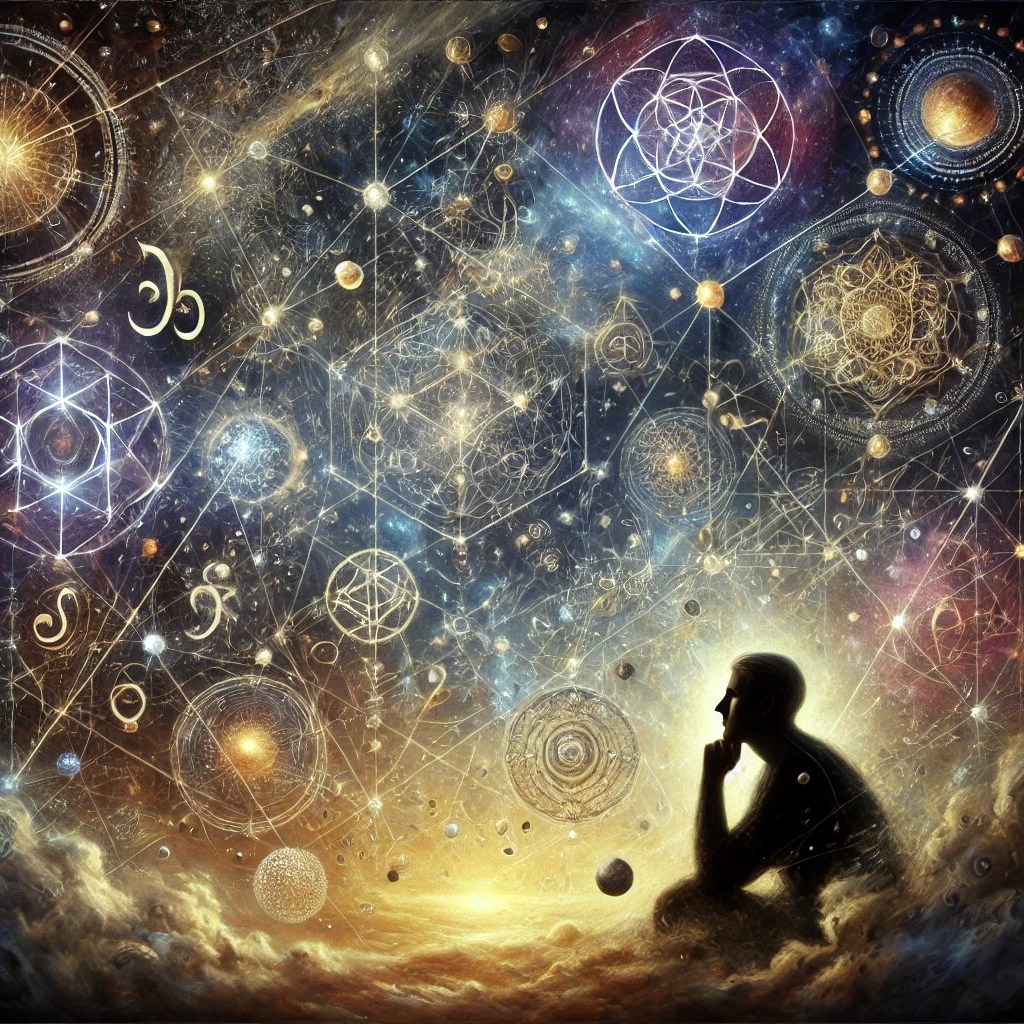
Carl Jung’s concept of synchronicity offers a profound insight into the interconnectedness of human experiences and the universe. Rather than being mere coincidences, Jung argued that synchronistic events carry deep psychological and spiritual significance, reflecting an unseen order that governs existence.
Drawing from his own experiences, dream analysis, and collaboration with physicist Wolfgang Pauli, Jung formulated the idea that seemingly unrelated events may be meaningfully connected, transcending traditional notions of causality. The implications of synchronicity suggest that reality is not as linear as it seems, but rather infused with hidden patterns that guide personal transformation and self-realization.
The Origins of Synchronicity in Jungian Thought
🧠 Jung’s Early Encounters with the Unexplained
From a young age, Jung experienced unusual phenomena that defied logical explanation—premonitions, symbolic dreams, and even paranormal occurrences. These events convinced him that there was more to the psyche than just personal memories and experiences.
He later formalized this idea in his theory of the collective unconscious, suggesting that human minds are connected through universal symbols, archetypes, and underlying patterns of meaning. This connection, Jung believed, manifests through synchronicity.
🌌 The Concept of Meaningful Coincidences
Jung defined synchronicity as an “acausal connecting principle”, meaning that events can be related not through direct cause and effect but through meaning.
For example:
- Thinking of an old friend you haven’t seen in years—only for them to call you the next day.
- Dreaming of a rare animal, then unexpectedly encountering it in waking life.
- Struggling with a major life decision and stumbling upon a book, conversation, or symbol that provides exactly the guidance you need.
These meaningful coincidences reveal an underlying structure in reality, suggesting that the unconscious mind and external events may be mysteriously interwoven.
Synchronicity and the Structure of Reality
🔍 Collaboration with Wolfgang Pauli – The Bridge Between Physics and Psychology
Jung’s interest in synchronicity led him to collaborate with Nobel Prize-winning physicist Wolfgang Pauli, who sought to reconcile psychology and quantum mechanics. Together, they explored the idea that:
- The unconscious mind is not just a personal repository of memories but interacts with the external world in ways beyond conventional science.
- The probabilistic nature of quantum mechanics suggests that reality is far more fluid than previously thought—leaving room for synchronistic phenomena.
- The universe is structured not just by physical laws but by symbolic, archetypal patterns that reveal themselves in unexpected ways.
This collaboration positioned synchronicity as a bridge between psychology and physics, implying that the mind and the material world are more connected than we realize.
🌀 Synchronicity as a Guide to Individuation
Jung believed that synchronicity was particularly active during periods of psychological transformation and individuation. When people embark on a journey of self-discovery and deep personal change, they often encounter striking coincidences that guide them forward.
- A person facing an identity crisis may repeatedly encounter symbols of rebirth and renewal in their daily life.
- Someone seeking spiritual growth may find unexpected mentors, books, or insights arriving at precisely the right moment.
- An individual undergoing therapy may experience dreams and real-world events that seem to “speak” to their unconscious struggles.
These patterns of synchronicity suggest that the universe itself may play a role in the process of personal evolution.
Key Psychological Insights from Synchronicity
🌌 The Collective Unconscious and Archetypal Guidance
Jung argued that the deep patterns behind synchronistic experiences arise from the collective unconscious, where:
- Symbols and archetypes shape the way we perceive and experience the world.
- Meaningful coincidences reflect deeper psychological truths that we may not be consciously aware of.
- Recognizing and engaging with these patterns can unlock personal transformation and insight.
Thus, synchronicity serves as a language of the unconscious, providing guidance and validation for those seeking self-knowledge.
📖 The Role of Myth and Dreams in Synchronicity
- Many ancient traditions and mythologies describe events eerily similar to Jung’s concept of synchronicity—where gods, omens, or fate intervene in meaningful ways.
- Dreams often foreshadow real-world events, hinting that the unconscious may be aware of underlying connections before the conscious mind recognizes them.
- By studying both dreams and synchronistic events, Jungians suggest that we can gain access to a deeper intelligence operating beyond conscious awareness.
🔥 Synchronicity as a Call to Transformation
One of the most powerful aspects of synchronicity is that it often occurs at moments of great psychological change or crisis.
- Facing a career dilemma and encountering unexpected symbols of a new path?
- Experiencing deep personal loss, only to find unexpected wisdom and comfort through a synchronistic event?
- At a crossroads in life, and suddenly receiving an unplanned opportunity that seems almost “designed” for you?
Rather than being dismissed as mere chance, synchronicity challenges us to see meaning in the seemingly random—to trust the process of personal transformation.
Modern Applications of Synchronicity
While Jung developed the theory of synchronicity in the early 20th century, its implications remain profoundly relevant today:
- Therapeutic Work: Many therapists use synchronicity to explore deeper themes in a patient’s life, recognizing that these events offer insights into unresolved conflicts.
- Spiritual Practices: Mystical traditions across cultures view synchronicity as a sign of alignment with a higher path, encouraging individuals to follow the symbolic messages they receive.
- Decision-Making: Some individuals rely on synchronistic signs to guide major life decisions, interpreting them as expressions of deep intuition.
- Scientific Exploration: Quantum mechanics continues to explore the fluidity of reality, suggesting that the rigid cause-and-effect model of the past may be incomplete.
Rather than being superstition, synchronicity invites us to reconsider the nature of time, consciousness, and interconnectedness, revealing hidden dimensions of reality.
Conclusion: Living in Alignment with Synchronicity
Jung’s exploration of synchronicity reveals a world far richer and more interconnected than we often assume. Rather than existing in isolation, human beings appear to be woven into a greater tapestry of meaning, where symbols, events, and consciousness itself interweave in unexpected ways.
Recognizing and embracing synchronistic experiences can:
✅ Enhance self-awareness and insight.
✅ Guide important life decisions with greater intuition.
✅ Foster a sense of purpose and connection to the universe.
✅ Provide validation and direction during moments of transformation.
By developing a deeper awareness of synchronistic events, individuals can learn to trust their personal journey, embrace meaningful coincidences, and discover a profound sense of harmony between the self and the cosmos.



 alter your perspective
Leave a comment