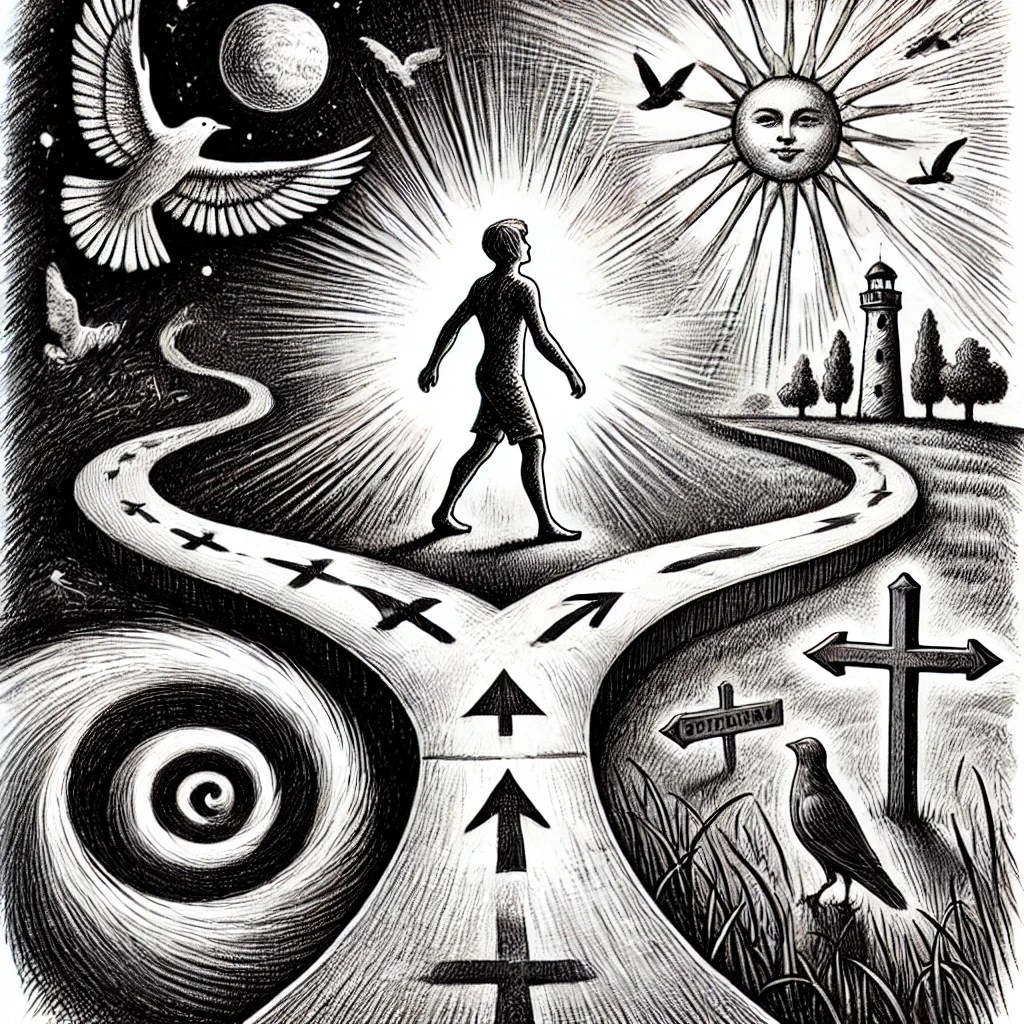
The puer aeternus, or “eternal boy,” is an archetype that embodies creativity, vitality, and imagination—yet when left unchecked, it can lead to stagnation, immaturity, and a refusal to embrace responsibility. Rooted in ancient mythology and Jungian psychology, this figure represents both the liberating and limiting aspects of eternal youth.
While the puer archetype fuels artistic inspiration, curiosity, and boundless potential, it also tempts individuals to remain in a state of perpetual adolescence, avoiding the necessary trials of adulthood. Through cultural narratives, psychological analysis, and personal transformation, we explore how integrating the puer into a balanced life is key to self-fulfillment and growth.
The Puer Aeternus: An Archetype of Duality
🌱 Eternal Youth as a Source of Vitality
The puer represents the childlike spirit within all individuals, embodying:
- Creativity and imagination, unburdened by practicality.
- A longing for adventure and transcendence, rejecting the mundane.
- A sense of boundless potential, refusing to be tied down.
This energy fuels artistic expression, innovation, and dreams, offering individuals the freedom to explore beyond societal expectations.
🙅♂️ The Dark Side: Avoidance of Reality
However, when the puer remains unbalanced, it manifests as:
- Avoidance of commitment and responsibility, fearing routine and obligation.
- A desire to escape reality, preferring fantasy over real-world struggles.
- A restless dissatisfaction with life, always seeking something “better” without engaging in the present.
Without integration, the puer leads to perpetual adolescence, an inability to build meaningful relationships, and a failure to develop personal discipline.
Jungian Perspectives: The Psychological Roots of the Puer
📖 Jung and the Eternal Child
Swiss psychiatrist Carl Jung explored the puer aeternus as both:
- A source of inner vitality that sustains creativity and wonder.
- A psychological trap that prevents individuals from engaging with the realities of adulthood.
He suggested that while it is important to honor the spirit of youth, it must be integrated with the responsibilities of mature existence.
🧠 Marie-Louise von Franz: The Dangers of the Puer
Jungian analyst Marie-Louise von Franz further explored the puer’s negative manifestations, identifying patterns such as:
- A deep-seated fear of settling down.
- A tendency to fantasize instead of take action.
- A struggle with long-term commitments, particularly in relationships and careers.
She warned that those caught in the puer archetype often resist structure and discipline, leading to a fragmented and unfulfilled existence.
The Puer and the Mother Complex
👩👦 The Role of Maternal Influence
The puer aeternus is often closely linked to the mother archetype, as individuals struggling with this pattern may:
- Remain overly attached to maternal nurturing.
- Struggle with independence and self-sufficiency.
- Subconsciously seek comfort rather than growth.
This prolonged dependence can prevent individuals from embracing the trials of adulthood, leading to avoidance behaviors and an inability to take initiative.
Cultural Reflections of the Puer Archetype
🌌 The Matrix and The Choice Between Fantasy and Reality
In The Matrix, Neo embodies the puer archetype—trapped in a world of illusion, reluctant to commit to the challenges of reality.
- The blue pill represents comfort, escapism, and denial of responsibility.
- The red pill symbolizes maturity, truth, and personal growth—even if it brings discomfort.
Neo’s decision to embrace reality mirrors the individuation process, in which one must leave behind the comforts of childhood to forge a meaningful existence.
👑 The Little Prince: The Struggle Between Worlds
Antoine de Saint-Exupéry’s The Little Prince presents another example of the puer archetype—a character longing for the purity of childhood while struggling to understand the world of adults.
- The Little Prince cherishes innocence and wonder but learns that meaning is only found through engagement with the world.
- The story highlights the tension between the idealism of youth and the responsibilities of maturity.
These cultural narratives reflect the universal challenge of integrating the puer into a balanced life.
The Journey to Integration: Balancing Youth and Maturity
⚖️ The Need for Balance: Creativity and Responsibility
A healthy integration of the puer involves:
- Embracing creativity and imagination while also committing to real-world tasks.
- Finding meaning in responsibility rather than seeing it as restrictive.
- Allowing space for adventure and discipline, ensuring neither dominates one’s existence.
When properly balanced, the puer fuels a dynamic and fulfilling life—one that honors both wonder and wisdom.
🚀 Work as a Path to Maturity
Jung emphasized that committing to meaningful work is one of the best ways to integrate the puer archetype.
- Work provides structure, channeling creative energy into tangible results.
- It builds discipline, preventing the mind from falling into escapist fantasies.
- It fosters purpose, creating a sense of self-actualization.
Through dedicated effort, individuals can bridge the gap between youthful inspiration and adult achievement.
Key Takeaways
- 🌱 The puer aeternus represents eternal youth, fueling creativity, imagination, and adventure.
- 🙅♂️ The unbalanced puer leads to avoidance of responsibility, preventing personal growth.
- 👩👦 The mother complex can hinder independence, fostering prolonged attachment to comfort and security.
- 🌌 Cultural examples like The Matrix and The Little Prince illustrate the struggle between fantasy and reality.
- ⚖️ Integration requires balancing playfulness with responsibility, allowing for both exploration and discipline.
- 🚀 Work provides a grounding force, helping the puer channel energy into purposeful action.
The Bigger Picture: Why This Matters
The puer aeternus archetype reflects a universal struggle—the tension between dreaming and doing, fantasy and reality, freedom and responsibility.
In modern society, where instant gratification, prolonged adolescence, and avoidance of hardship are increasingly prevalent, understanding and integrating this archetype is more important than ever.
To embrace maturity does not mean rejecting youth—it means channeling it wisely.
By integrating the energy of the puer with the wisdom of adulthood, individuals can build meaningful lives, driven by both imagination and responsibility.
In the end, true fulfillment lies not in eternal escape, but in the courage to grow. 🌱✨



 alter your perspective
Leave a comment