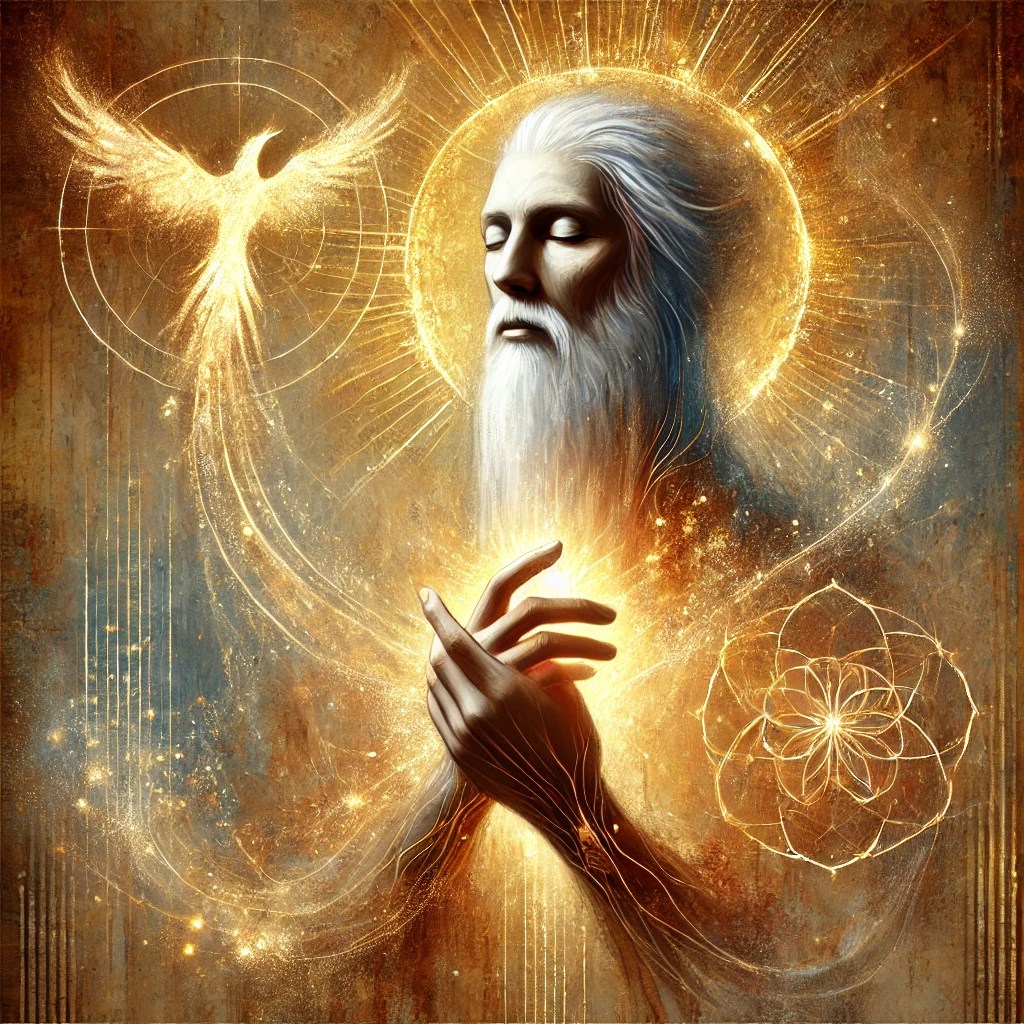
The archetype of the wounded healer is one of the most profound symbols in psychology, mythology, and spiritual traditions. It embodies the idea that true healing does not come from being whole and untouched by suffering, but from confronting and transforming one’s wounds.
Carl Jung, who popularized this concept, believed that a healer’s own suffering is what enables them to guide others toward healing. Whether through mythological figures like Chiron and Asclepius, religious symbolism in Christ’s sacrifice, or modern therapeutic practices, this theme recurs across cultures and time periods.
This exploration delves into the wounded healer’s journey, the transformative power of suffering, and how healing extends beyond the individual to the collective human experience.
The Wounded Healer: A Universal Archetype
🌟 What Is the Wounded Healer?
The wounded healer archetype suggests that personal suffering, when integrated properly, becomes a source of healing power. This idea applies to:
- Psychotherapists, doctors, and healers who use their past struggles to help patients.
- Artists and philosophers who translate pain into insight.
- Spiritual figures who endure suffering to bring wisdom to others.
This archetype teaches that pain is not meaningless—it is the doorway to transformation.
🧠 Jung’s Psychological Perspective
Carl Jung proposed that:
- Healers are drawn to their profession because of their own wounds.
- By confronting their pain, they develop deeper empathy and understanding.
- If wounds remain unhealed, they can unconsciously project onto others, leading to unhealthy therapeutic relationships.
For Jung, true individuation (self-realization) requires integrating one’s wounds rather than repressing them.
Mythological Foundations of the Wounded Healer
⚔️ Chiron: The Immortal Wound
One of the most famous wounded healer myths is that of Chiron, the wise centaur of Greek mythology:
- Chiron was accidentally wounded by a poisoned arrow, leaving him with a wound that would never heal.
- Despite his pain, he became a great teacher, healer, and mentor to heroes like Achilles and Asclepius.
- He ultimately sacrificed himself, choosing death to free Prometheus, an act that symbolizes the transformation of suffering into wisdom.
Chiron’s story illustrates a fundamental truth: those who suffer deeply are often the ones who possess the greatest capacity to heal others.
🌌 Asclepius: The God of Medicine
Asclepius, Chiron’s most famous student, became the god of healing in Greek mythology.
- He was said to have gained divine medical knowledge from Chiron and even learned how to resurrect the dead.
- His healing temples (Asclepions) were sanctuaries for physical and spiritual recovery, where dreams and visions guided treatment.
- The staff of Asclepius, entwined with a snake, remains a symbol of medicine today.
His story emphasizes that healing is a sacred act that connects the physical, psychological, and spiritual realms.
✝️ Christ as the Wounded Healer
In Christian tradition, Jesus embodies the ultimate wounded healer:
- Through suffering, he brings redemption to others.
- His wounds symbolize both pain and transformation.
- His message is one of healing not just the body, but the soul.
This idea is reflected in countless religious and mystical traditions, where suffering leads to enlightenment and wisdom.
Healing as a Psychological and Spiritual Journey
🔍 Suffering as a Path to Healing
The wounded healer does not simply suffer—they transform their suffering into a tool for healing. This requires:
- Facing one’s wounds instead of suppressing them.
- Using personal experience to empathize with others.
- Recognizing that suffering connects all human beings.
Healing is not just about removing pain—it is about understanding it and allowing it to change us.
🌱 The Therapist as a Wounded Healer
In psychotherapy, the wounded healer concept is especially relevant:
- Many therapists are drawn to the field because of their own past struggles.
- A therapist’s ability to help depends on how well they have addressed their own wounds.
- Unresolved wounds can create countertransference, where the therapist projects their own issues onto the patient.
Thus, a healer must heal themselves first to effectively guide others.
⚖️ Life and Death: The Dual Nature of Healing
The interconnection between life, death, and healing is a recurring theme in mythology and psychology.
- Asclepius learned how to bring back the dead, but this power was considered too dangerous.
- Chiron’s suffering led to his transformation into a constellation.
- Jung believed that facing mortality is essential for deep psychological healing.
By acknowledging impermanence and suffering, we gain a deeper appreciation for life and healing.
Healing Beyond the Individual: The Collective Wound
🌍 Healing as a Collective Experience
The wounded healer archetype applies not just to individuals but to society as a whole:
- Wars, oppression, and trauma leave deep wounds in collective consciousness.
- Artists, activists, and spiritual leaders often emerge from suffering to heal the world.
- True healing involves addressing both personal and societal wounds.
When we work through our own suffering, we contribute to the healing of our families, communities, and future generations.
🌀 The Power of Shared Vulnerability
Many cultures have rituals that transform suffering into communal healing, such as:
- Indigenous healing circles.
- Religious sacraments.
- Modern group therapy.
By acknowledging our wounds and sharing them, we create a space where healing can occur on a collective level.
Key Takeaways
- 💔 Pain itself does not make one a healer—it is the process of transforming pain into wisdom that does.
- ⚔️ Chiron’s myth shows that our deepest wounds can become our greatest source of healing.
- 🌌 Healing is both a personal and collective process, deeply intertwined with spirituality, psychology, and mythology.
- 🌀 Therapists and healers must confront their own wounds to avoid projecting them onto others.
- ⚖️ Understanding the balance between life, death, and healing allows for deeper transformation.
- 🌈 By healing ourselves, we contribute to the healing of humanity.
The Wounded Healer’s Gift
The wounded healer is not just a mythological symbol—it is a living reality.
Each of us carries wounds, but these wounds do not have to define us. Instead, they can shape us into compassionate, wise, and resilient individuals who bring healing to the world.
Jung reminds us that true healing is not about erasing pain but about integrating it into our journey.
The greatest healers, artists, and spiritual leaders throughout history have all been wounded—but it is through their wounds that they found the strength to transform both themselves and others.
In embracing the wounded healer within, we discover that our pain is not the end of our story—it is the beginning of something greater. 🌟✨



 alter your perspective
Leave a comment