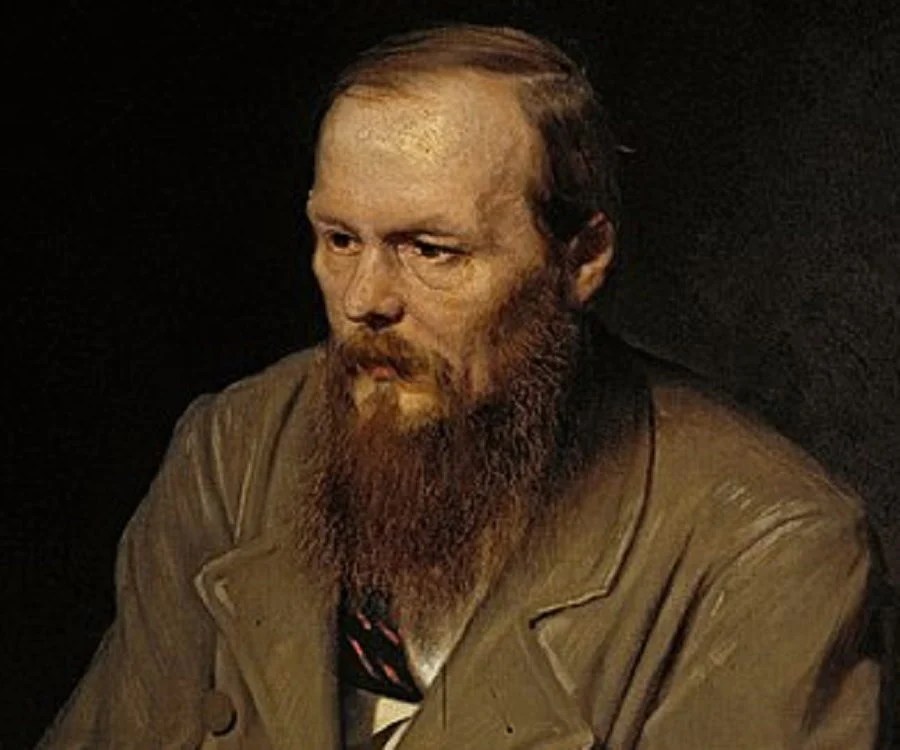
Fyodor Dostoevsky stands as one of the most profound psychological novelists, blending literature, philosophy, and moral inquiry into narratives that dissect the human soul’s darkest recesses. His works are marked by themes of suffering, redemption, free will, and the perils of nihilism, reflecting a deep engagement with the existential crises of the modern individual.
Born in 1821 in Moscow, his life was shaped by tragedy, personal struggles, and political turmoil. Early losses, financial hardship, and even imprisonment contributed to the depth of his philosophical outlook. These experiences culminated in masterpieces like “Crime and Punishment,” “The Brothers Karamazov,” and “The Idiot”, which continue to challenge and inspire readers today.
Dostoevsky’s narratives are not just stories but philosophical investigations, compelling readers to confront the contradictions of human nature, the limits of rationality, and the necessity of faith and moral responsibility.
The Depth of Dostoevsky’s Philosophy
📚 Literature as a Medium for Psychological Inquiry
Dostoevsky was among the first writers to plunge deeply into the inner struggles of the human mind. His protagonists are often tormented figures, wrestling with their consciences in a tug-of-war between moral responsibility and intellectual rebellion.
Unlike traditional morality tales, Dostoevsky presents characters who defy simplistic categorization—neither wholly virtuous nor purely evil, but driven by complex motivations, desires, and contradictions.
⚖️ The Burden of Free Will and Moral Choice
A recurring theme in his work is the dilemma of free will—whether absolute freedom leads to liberation or self-destruction. Dostoevsky’s characters grapple with radical ideas, often testing the limits of morality:
- Raskolnikov (Crime and Punishment) – Commits murder under the illusion of a superior moral reasoning, only to be consumed by guilt.
- Ivan Karamazov (The Brothers Karamazov) – Rejects God and moral absolutes, leading to philosophical despair.
- Prince Myshkin (The Idiot) – Embodies pure goodness, yet struggles in a world that often rewards cunning and manipulation.
Dostoevsky forces the reader to confront a fundamental question: Can human beings create meaning without faith, morality, or spiritual guidance?
🌌 The Critique of Nihilism and Rationalism
Dostoevsky was deeply critical of 19th-century ideological movements that sought to dismantle traditional values in favor of cold rationalism. He saw nihilism and materialism as dangerous forces that could lead to moral collapse and existential emptiness.
- In “Demons”, he portrays a radical intellectual movement whose ideas spiral into violence and chaos, highlighting the unintended consequences of rejecting spiritual and ethical foundations.
- “Notes from Underground” presents a man who resists all logic and progress, embodying the raw irrationality of human nature, proving that people do not always act in their self-interest.
Dostoevsky’s warnings remain eerily relevant today, as societies continue to grapple with meaning in an increasingly secular world.
The Search for Redemption Through Suffering
💔 Suffering as a Path to Truth
One of Dostoevsky’s most radical ideas is that suffering is not merely an affliction but a gateway to self-knowledge and redemption.
His characters often endure immense psychological and physical torment, but through it, they discover a deeper truth about themselves and the world.
- Raskolnikov’s torment following his crime leads him toward humility and redemption.
- Alyosha Karamazov represents faith and spiritual resilience, proving that suffering can refine the soul rather than destroy it.
- Dmitri Karamazov, despite his flaws, finds a sense of spiritual awakening in the face of despair.
Dostoevsky suggests that without suffering, there can be no growth, no depth, no revelation.
🌱 The Necessity of Faith and Spirituality
Although Dostoevsky presents religious themes, his approach is far from simplistic. His faith is not naive—it is hard-won, questioned, and deeply personal. He recognizes that faith cannot be imposed but must be discovered through individual struggle.
- In “The Brothers Karamazov”, the Grand Inquisitor scene is a powerful critique of organized religion, yet it also affirms the necessity of belief in something beyond material existence.
- Dostoevsky does not advocate blind faith but suggests that without spiritual grounding, human beings drift into despair or moral relativism.
Key Lessons from Dostoevsky’s Works
- 🧠 Psychological Depth – Dostoevsky’s characters mirror the real struggles of human consciousness, making his works timeless.
- ⚖️ Moral Complexity – His novels refuse to give simple answers, instead forcing the reader to confront moral ambiguity.
- 🌍 Cultural Critique – His warnings about nihilism, radical ideologies, and the collapse of spiritual values remain relevant in modern discussions about philosophy and ethics.
- 💡 Faith vs. Doubt – Dostoevsky’s works do not impose belief but rather explore the necessity of faith in the face of suffering and meaninglessness.
- 🔄 The Role of Suffering – Instead of avoiding pain, Dostoevsky sees suffering as a means of transformation—a path toward deeper understanding and moral clarity.
Conclusion – Why Dostoevsky Still Matters
Dostoevsky’s legacy is not merely literary; it is a philosophical roadmap for confronting life’s greatest existential dilemmas. His works probe the darkest corners of human existence, yet they also illuminate the possibility of redemption, meaning, and moral responsibility.
His exploration of freedom, suffering, and faith is not just a reflection of 19th-century Russia but a guide for modern individuals navigating the chaos of contemporary life. His insights remind us that the search for meaning is never easy, but it is always worth pursuing.



 alter your perspective
Leave a comment