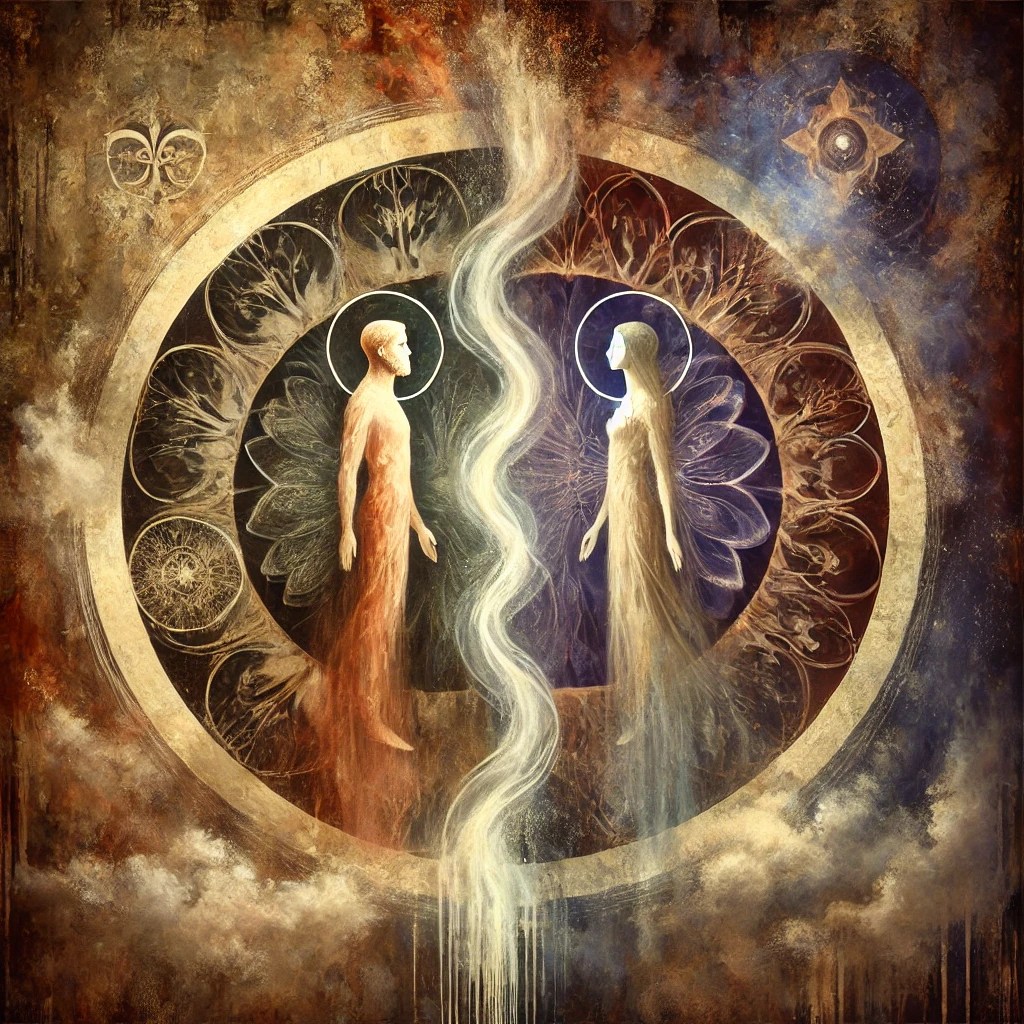
Carl Jung’s model of the psyche presents a rich and intricate exploration of human psychology, emphasizing the importance of the unconscious in shaping identity, relationships, and personal growth. Among the most influential concepts within his framework are the anima and animus—archetypes representing the feminine aspects within men and the masculine aspects within women.
Jung believed that the integration of these unconscious elements is crucial for individuation, the process of becoming a complete and authentic self. However, failure to engage with these inner figures can lead to projections, dysfunctional relationships, and emotional instability.
This exploration of Jung’s anima and animus theory highlights the structure of the psyche, the challenges of integration, and the transformative potential of embracing these inner forces.
The Psyche: A Map of Inner and Outer Worlds
Jung divides the human psyche into conscious and unconscious realms, each influencing behavior, perception, and personal development.
🌍 The Outer World: Persona and Ego
- Persona – The social mask that individuals wear to navigate society. It represents who we pretend to be rather than who we truly are.
- Ego – The conscious self, shaping one’s sense of identity but often limited by external conditioning.
These outer layers protect and define us, yet they fail to reveal the deeper forces at play within the unconscious mind.
🌑 The Inner World: The Unconscious Mind
- The Shadow – Represents repressed aspects of the personality, including negative traits and unacknowledged desires.
- The Anima/Animus – The inner opposite, carrying qualities of the opposite gender that influence emotions, creativity, and relationships.
- The Self – The totality of the psyche, the integrated and balanced state that individuation seeks to achieve.
While shadow work is often the first step toward self-awareness, integrating the anima and animus is a far greater challenge, as they dwell deep within the unconscious, shaping emotional responses, fantasies, and interpersonal relationships.
The Anima and Animus: Mirrors of the Opposite Self
The anima and animus act as psychological bridges between the conscious and unconscious, influencing how individuals relate to themselves and others.
👩 The Anima – The Feminine Soul Within Men
The anima represents a man’s unconscious feminine side, shaping his intuition, emotions, and relationships with women. It appears in dreams, fantasies, and artistic inspiration, often taking the form of idealized feminine figures or destructive temptresses.
🔹 Stages of Anima Development:
- Eve – The primal anima, associated with basic instincts, sexuality, and physical attraction.
- Helen – The romantic anima, embodying beauty, seduction, and the idealized female image.
- Mary – The spiritual anima, representing deeper emotional connection, wisdom, and care.
- Sophia – The fully integrated anima, bringing harmony, intuition, and self-awareness.
A poorly developed anima can lead to emotional instability, irrational fears, and dysfunctional romantic relationships. Conversely, an integrated anima allows for deep emotional intelligence and creative insight.
🧔 The Animus – The Masculine Spirit Within Women
The animus represents a woman’s unconscious masculine side, shaping her logic, assertiveness, and intellectual pursuits. It manifests as inner voices, figures of authority, or abstract ideals.
🔹 Stages of Animus Development:
- The Brute – The primal animus, associated with aggression, dominance, and raw power.
- The Hero – The courageous animus, symbolizing ambition, strength, and willpower.
- The Sage – The intellectual animus, representing reason, discipline, and wisdom.
- The Spirit – The fully realized animus, integrating rationality with deeper intuition.
A negative animus can result in rigid thinking, cold detachment, and unrealistic expectations in relationships. When properly integrated, it fosters confidence, balanced decision-making, and a sense of inner security.
Challenges in Integrating the Anima and Animus
🎭 Projections in Relationships
The most common manifestation of the anima and animus is projection onto romantic partners. Individuals unconsciously assign traits of their inner opposite onto others, leading to idealization, disillusionment, and relationship conflicts.
- A man may see his anima in a woman, expecting her to fulfill his fantasies of emotional depth and spiritual connection.
- A woman may project her animus onto a man, idolizing his strength and intellect while neglecting her own development.
Overcoming projection requires self-awareness, reflection, and acknowledging that these idealized figures exist within oneself, not in others.
💔 The Influence of Parental Figures
Parental relationships heavily shape the anima and animus. A negative maternal experience can lead a man to struggle with intimacy or develop a hostile view of women, while a controlling father can cause a woman to resent male authority figures or reject her own assertiveness.
Recognizing these patterns helps individuals break free from inherited psychological constraints and reclaim their inner anima/animus.
🎨 The Role of Creativity in Integration
Art, music, writing, and dream work provide valuable ways to engage with the anima and animus. Jung believed that creative expression externalizes unconscious material, allowing individuals to process emotions, confront fears, and gain insight into their deeper selves.
By interacting with these inner figures through imaginative exercises and symbolic exploration, individuals cultivate a healthier and more conscious relationship with their unconscious.
Why Integrating the Anima and Animus Matters
🔹 Emotional Balance – Integration allows for greater emotional intelligence, self-expression, and relationship harmony.
🔹 Creativity and Intuition – A well-developed anima/animus unlocks artistic potential and deeper self-awareness.
🔹 Personal Growth – Accepting both masculine and feminine aspects leads to wholeness and self-acceptance.
🔹 Spiritual and Psychological Healing – Engaging with the anima and animus fosters a profound sense of purpose and transformation.
Without this integration, individuals remain fragmented, continuously projecting unresolved aspects of themselves onto others, perpetuating cycles of disappointment and disillusionment.
Conclusion – The Anima and Animus as Inner Guides
Jung’s model of the psyche reveals that the journey toward individuation requires deep engagement with the anima and animus. These archetypes, when unacknowledged, lead to projections, inner conflict, and relational struggles. But when embraced, they become sources of creativity, wisdom, and profound transformation.
By recognizing projections, exploring creativity, and acknowledging the influence of past relationships, individuals can transcend unconscious patterns and integrate their full potential.
The anima and animus are not obstacles but guides, leading toward a richer, more balanced, and fulfilling existence—one that embraces both the light and dark aspects of the self in a unified whole.


 alter your perspective
Leave a comment