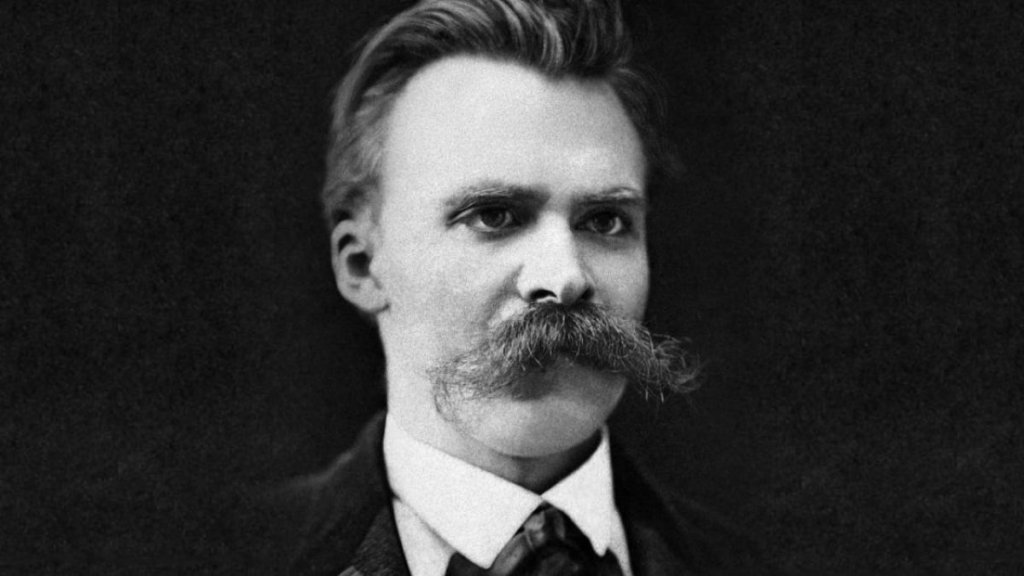
Friedrich Nietzsche’s philosophy confronts the crisis of meaning in modern life, diagnosing nihilism as a central challenge for Western civilization. He argues that the decline of religious and metaphysical beliefs has left humanity in a void where traditional values no longer hold authority, leading to disorientation, despair, and mediocrity. However, rather than surrendering to this existential vacuum, Nietzsche advocates for a radical revaluation of values, offering a path toward self-overcoming, creative power, and life-affirmation.
His concepts of the Übermensch, the Will to Power, and Eternal Recurrence serve as antidotes to nihilism, encouraging individuals to embrace their own agency, cultivate personal values, and engage with life fully. By rejecting passive submission and embracing the struggle of existence, Nietzsche challenges us to create meaning in a world where none is given.
The Different Faces of Nihilism
🌌 The Death of God – The Collapse of Traditional Values
Nietzsche’s declaration that “God is dead” is not a celebration of atheism but a recognition of a cultural transformation. The decline of religious belief and absolute morality leaves a void where meaning once existed, forcing individuals and societies to confront the absence of inherent purpose.
This event gives rise to nihilism—a state where nothing holds intrinsic value, leading to feelings of emptiness and meaninglessness. The challenge Nietzsche presents is: how do we move forward without falling into despair?
🤔 Three Forms of Nihilism
Nietzsche categorizes different responses to the collapse of meaning:
- Despair (Schopenhauer and Buddhism) – A belief that life is suffering, leading to withdrawal from worldly desires.
- Disorientation (Christianity and Moral Dogma) – A reliance on external systems of morality to avoid confronting meaninglessness.
- The Last Man (Complacency and Mediocrity) – A passive acceptance of trivial pleasures as substitutes for genuine fulfillment.
Nietzsche sees the last man as the worst outcome of nihilism—a society that values comfort and conformity over greatness and self-overcoming.
⚖️ Passive vs. Active Nihilism
Nietzsche contrasts two attitudes toward nihilism:
- Passive Nihilism: A state of resignation, where individuals surrender to despair or seek comfort in outdated beliefs.
- Active Nihilism: A destructive but necessary phase, where individuals reject old values and create new ones, embracing self-overcoming as the foundation of meaning.
This distinction is crucial—nihilism is not the end but the beginning of a transformation.
The Path to Overcoming Nihilism
🌱 The Übermensch – Creating Meaning Beyond Nihilism
The Übermensch (Overman or Superman) is Nietzsche’s vision of a higher type of human—one who:
- Rejects inherited moral values and creates their own meaning.
- Embraces struggle and hardship rather than seeking comfort.
- Lives authentically and powerfully, shaping reality through their Will to Power.
The Übermensch is not a tyrant or a conqueror but an individual who fully affirms life, creating art, values, and purpose in a world devoid of inherent meaning.
🔄 Eternal Recurrence – A Thought Experiment for Authentic Living
The concept of eternal recurrence asks:
“If you had to live your life over and over again for eternity, exactly as it is, would you rejoice or despair?”
This radical question forces individuals to take responsibility for their choices, living in a way that embraces life fully rather than passively enduring it.
💪 The Will to Power – The Drive for Self-Overcoming
Nietzsche’s Will to Power is not just a desire for dominance, but a creative force—the innate drive to grow, evolve, and assert one’s potential.
- It is the artist creating beauty, the thinker pushing intellectual boundaries, the warrior facing challenges head-on.
- Unlike the passive nihilist, who sees no point in striving, the one who embraces the Will to Power transforms obstacles into fuel for self-realization.
Key Takeaways – Nietzsche’s Challenge to Us
- 🔥 Face Nihilism Head-On: Accept that meaning is not given but created.
- 🌀 Reject Comfort and Conformity: Avoid becoming the last man, trapped in mediocrity.
- 🎭 Embrace the Will to Power: See life as an arena for growth and self-overcoming.
- ⚖️ Create Personal Values: Rather than depending on external morality, become the author of your own life.
- 🔄 Live as if Eternal Recurrence Were True: Make choices worthy of an eternal life, rather than drifting through existence.
Nietzsche’s philosophy is not a retreat into despair but a call to radical empowerment. He invites us to see life not as something to endure, but as something to shape, affirm, and celebrate. The challenge remains: will we accept the burden of creating our own values, or will we succumb to the emptiness of passive nihilism?



 alter your perspective
Leave a comment