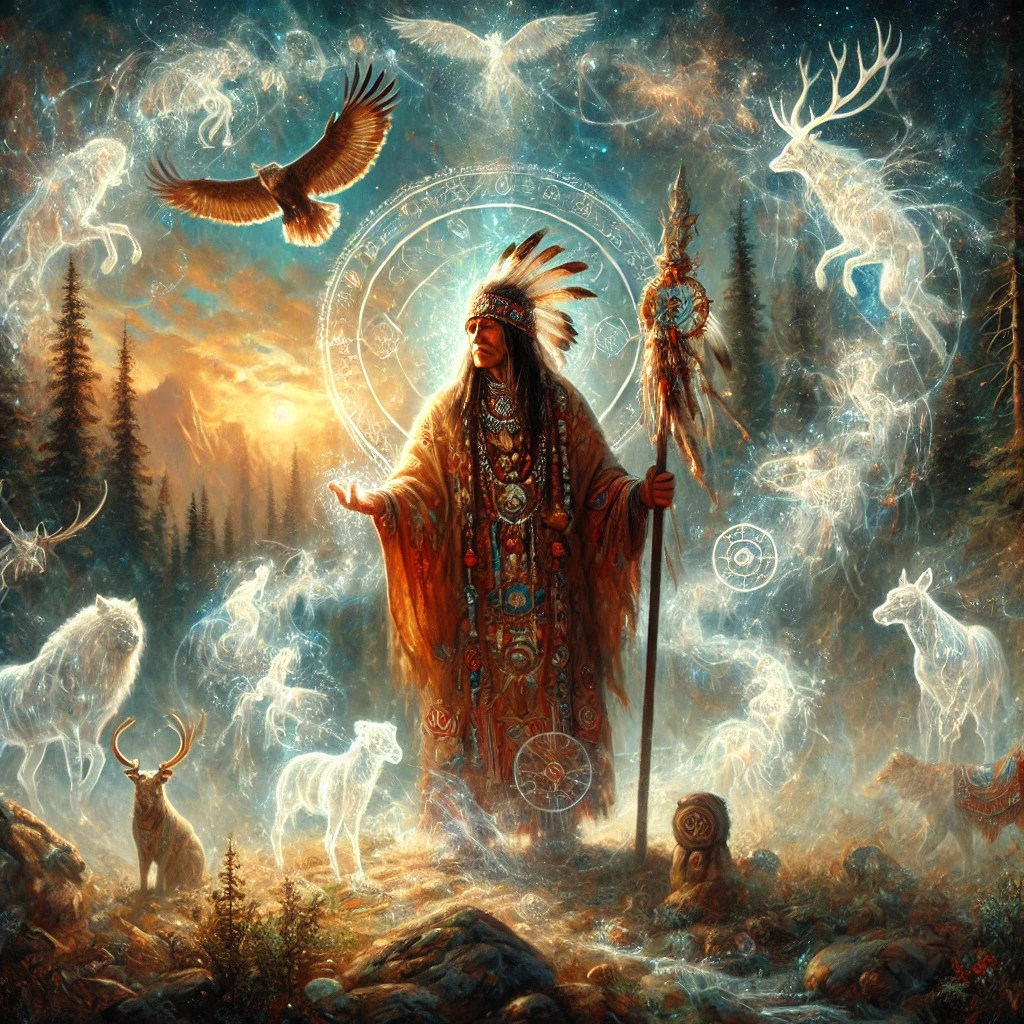
Shamanism, one of the oldest spiritual traditions known to humanity, serves as a bridge between the physical and spiritual realms, guiding individuals toward healing, wisdom, and self-discovery. Rooted in animistic worldviews, shamanic practices emphasize interconnectedness, symbolic death and rebirth, and the integration of chaos and order.
Shamans are not only healers and visionaries, but also psychopomps—guides for lost souls—offering insight into the unseen forces that shape human existence. Their journey mirrors the archetypal Hero’s Journey, requiring a descent into darkness, confrontation with the unknown, and eventual transformation.
Through this ancient tradition, we uncover the psychological and mythological patterns that still shape human consciousness today.
The Shamanic Worldview: A Journey Through Realms
Shamanism is deeply embedded in the collective unconscious, appearing in myths, dreams, and initiatory experiences across cultures.
🌍 The Interconnected Web of Life
- Shamans operate within an animistic reality, where everything—humans, animals, plants, and even stones—possesses a living essence or spirit.
- This interconnected web reflects the belief that healing an individual also heals the collective, reinforcing the sacred bond between humanity and nature.
🌳 The World Tree: Axis Mundi
Many shamanic traditions speak of a sacred tree or cosmic pillar, symbolizing the three interconnected realms of existence:
- The Underworld (Subconscious/Chaos) – The realm of ancestors, spirits, and primal forces; a place of shadow confrontation.
- The Middle World (Physical Reality) – The waking world of human experience, where shamans mediate between realms.
- The Upper World (Transcendence/Enlightenment) – The realm of wisdom, divine knowledge, and spiritual guidance.
This symbolic structure mirrors the inner journey of self-discovery, where individuals must descend into their unconscious, confront their fears, and ascend toward higher awareness.
Initiation and the Wounded Healer Archetype
🔥 The Shaman’s Initiation: Descent into Chaos
A shaman is not simply chosen—they are called by suffering. This calling often manifests as:
- A personal crisis – physical illness, psychological breakdown, or a near-death experience.
- A symbolic dismemberment – visions of being torn apart and reconstructed, representing ego death and rebirth.
- Encounters with spirit guides – guiding the shaman toward hidden knowledge.
This process echoes mythological initiation rites, where the hero must die to their old self before returning with new wisdom.
🩹 The Wounded Healer: Healing Through Suffering
- Many shamans experience profound suffering, which grants them the ability to empathize with those they heal.
- This mirrors Jung’s concept of the wounded healer, suggesting that those who have confronted their own darkness can guide others through theirs.
The path to wisdom is forged through suffering, transforming personal wounds into sources of strength.
Psychological and Mythological Parallels
🌀 Chaos and Order: The Psychological Significance of the Shamanic Path
- Shamans navigate chaos, confronting forces that disrupt balance within the self and the community.
- This aligns with Jung’s individuation process, where an individual must integrate their shadow to attain wholeness.
- The shamanic journey thus serves as a model for psychological transformation, teaching that growth requires embracing both light and darkness.
🦉 Animal Archetypes and Spirit Guides
- Shamans often encounter spirit animals, which serve as guides and protectors.
- These figures symbolize hidden aspects of the psyche, representing instincts, wisdom, and untapped potential.
- Interacting with these archetypes fosters self-awareness and alignment with one’s true nature.
Shamanism in the Modern World: Lost Wisdom and Revival
Despite its ancient roots, shamanism remains highly relevant in modern psychology and personal development.
🌱 Lessons for Contemporary Society
- Reconnection with Nature – Many psychological ailments stem from disconnection with the natural world; shamanism encourages a return to harmonious living.
- Healing Through Symbolic Rituals – Engaging in meditative practices, visualization, and creative expression mirrors shamanic techniques for integrating the unconscious.
- The Need for Rites of Passage – Modern society lacks meaningful initiation experiences, leaving many in prolonged psychological adolescence. The shamanic model offers a framework for navigating life’s transitions.
🧘 Shamans, Psychotherapists, and Spiritual Teachers
- Today’s psychotherapists, depth psychologists, and spiritual mentors embody the role of modern shamans, guiding individuals through their psychic wounds.
- Figures like Carl Jung recognized shamanism’s psychological significance, drawing on its methods to explore the unconscious mind.
By reviving the wisdom of shamanic traditions, modern individuals can find tools for healing, transformation, and deeper self-awareness.
Conclusion: The Eternal Call of the Shaman
Shamanism is more than an ancient spiritual practice—it is a universal journey of transformation that echoes through myths, religions, and psychological development.
By confronting inner chaos, embracing suffering as a path to wisdom, and recognizing the sacred interconnectedness of all life, the shamanic path provides a timeless model for healing and self-discovery.
The modern world may have forgotten its shamans, but the call to transformation remains.
Those willing to listen—to descend into the darkness, navigate the unknown, and return with wisdom—carry forward the eternal legacy of the wounded healer.


 alter your perspective
Leave a comment