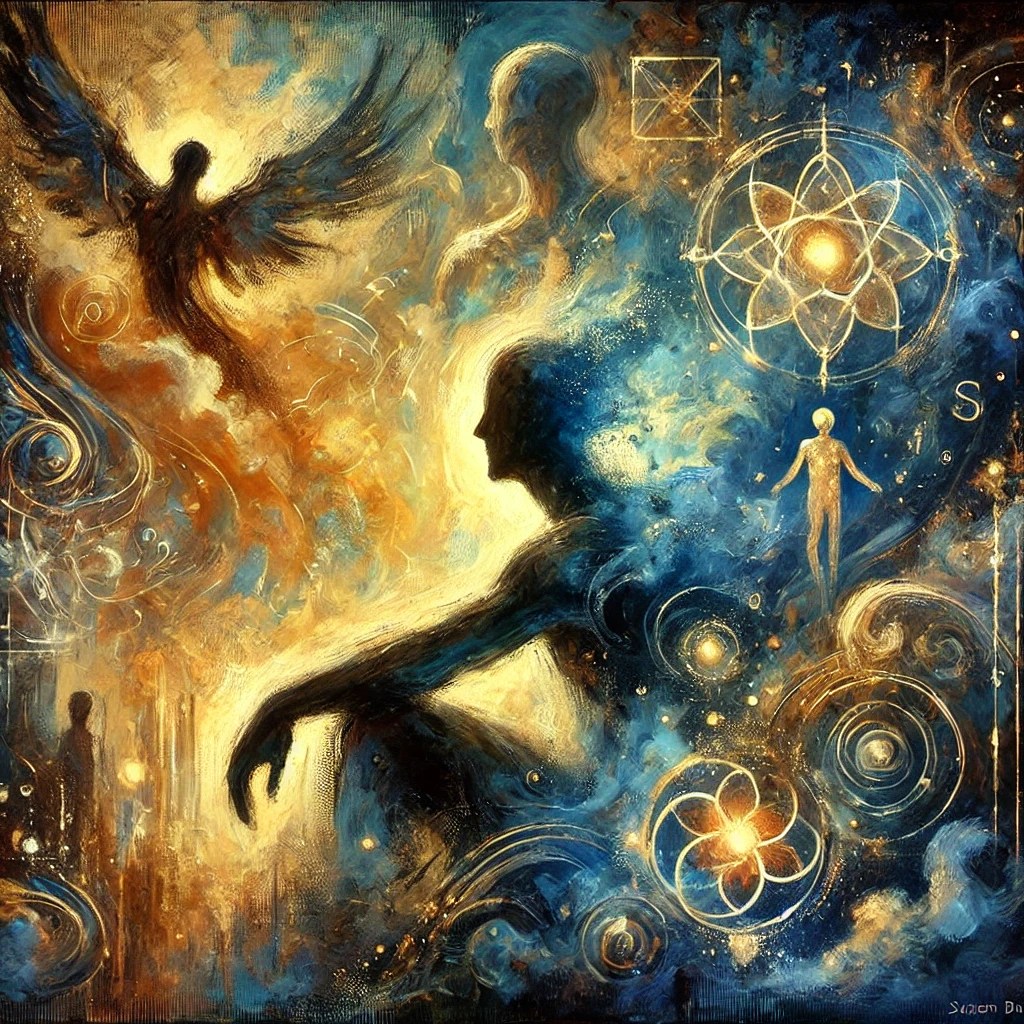
Art, the Unconscious, and the Journey to Self-Discovery
The life and art of Peter Birkhäuser offer a fascinating glimpse into the intersection of creativity, psychology, and spiritual transformation. Born in Basel, Switzerland, in 1911, Birkhäuser was deeply influenced by his own unconscious mind, undergoing a profound personal crisis that eventually led him to the teachings of Carl Jung. Unlike many artists who draw solely from external inspiration, Birkhäuser’s work became an intimate dialogue with the unconscious, giving shape to the mystical, symbolic, and often unsettling forces hidden within the psyche.
Struggling with existential despair, he found himself disconnected from traditional artistic movements and personal fulfillment. However, through dream analysis and Jungian psychology, he gradually unlocked the symbolic language of his unconscious mind, leading to a radical transformation in both his art and personal outlook. His paintings reflect archetypal imagery, capturing profound truths about the human condition, the process of individuation, and the eternal struggle between rationality and spirituality.
Birkhäuser’s story is one of descent and rebirth—an odyssey through darkness, loss, and rediscovery. His art stands as a testament to the power of embracing the unconscious, engaging with one’s shadow, and ultimately emerging into the light of self-awareness.
The Unconscious as a Creative Force
🎨 A Journey Within – Unlike traditional artists who sought inspiration in the external world, Birkhäuser turned inward. His paintings became visual manifestations of psychological and spiritual exploration, making the unconscious a central force in his work.
🖌️ Struggle and Transformation – A period of intense crisis in his life led to creative stagnation, but instead of abandoning his craft, he used it as a medium for self-inquiry. Through art, he began decoding the imagery of his own dreams, unlocking hidden layers of his psyche.
🌌 Jungian Influence – Jung’s ideas on archetypes, the shadow, and the collective unconscious played a critical role in shaping Birkhäuser’s artistic vision. His exposure to dream analysis provided him with a new framework for understanding his inner struggles.
💔 Loss and Personal Evolution – The sudden death of his wife, Sibylle, marked a turning point in his life, further deepening his engagement with themes of death, rebirth, and transformation. His later works reflect a more profound connection to spiritual and metaphysical dimensions.
🔥 From Darkness to Light – Birkhäuser’s art embodies the psychological process of individuation, where confronting the shadow self leads to greater wholeness. His work is a visual guide to the struggles of identity, loss, and renewal, offering profound insights into the transformative power of suffering.
Key Themes in Birkhäuser’s Art
🔮 The Unseen World – Many of his paintings depict mystical, dreamlike landscapes that reveal the unconscious mind at work. His visual style bridges the gap between reality and the inner world, making his paintings haunting yet deeply symbolic.
📜 The Language of Dreams – Birkhäuser meticulously recorded over 3,400 dreams, translating their imagery into visual form. His ability to give shape to dream symbolism illustrates the deep connection between creative expression and psychological insight.
🌱 The Individuation Process – Following Jungian principles, Birkhäuser’s work reflects the idea that true self-discovery requires integrating all aspects of the psyche—both the light and the dark. His paintings serve as maps of the soul’s journey, depicting the struggle between consciousness and the unknown.
⚖️ Balancing Rationality and Spirituality – Many of his works explore the tension between science, logic, and the mystical realms of the unconscious. His art often juxtaposes mechanical, structured elements with organic, fluid imagery, mirroring humanity’s internal conflict between reason and intuition.
🌌 Archetypal and Collective Themes – His paintings do not merely depict personal struggles but resonate with universal archetypes, making them relevant across cultures and generations. Themes of transcendence, metamorphosis, and the eternal battle between darkness and light pervade his work.
🧠 Embracing the Shadow – Birkhäuser’s art is a visual representation of shadow work, the psychological process of confronting the hidden, suppressed, or rejected parts of oneself. His paintings offer a bold confrontation with the unknown, depicting figures that embody fear, transformation, and enlightenment.
✨ Art as Alchemy – His creative process mirrors the alchemical transformation of the self, turning psychological suffering into a source of wisdom and creative energy. His paintings are not just artistic expressions but deeply personal revelations, showing how one can transmute suffering into insight.
Birkhäuser’s Legacy: The Power of Self-Discovery Through Art
🖼 The Role of the Artist as a Visionary – Birkhäuser was not merely an artist but a seer—someone who used his craft to decode messages from the unconscious. His paintings serve as guides for those navigating their own psychological depths, illustrating that artistic creation can be a spiritual and existential necessity.
🔄 Creativity as a Mirror of the Psyche – His journey underscores the idea that art is a tool for self-reflection. His work demonstrates that art can serve as both a personal diary and a universal message, offering insight into the human struggle for meaning and wholeness.
📖 A Lesson in Embracing the Unknown – The central lesson from Birkhäuser’s life is that growth and transformation require a willingness to confront uncertainty. By embracing the mysteries of the unconscious, he was able to transcend personal despair and create works that speak to the universal human experience.
🔥 Facing the Inner Abyss – His story reminds us that the journey of self-discovery is not a comfortable one. True wisdom arises not from avoiding suffering but from engaging with it directly, using pain as a catalyst for transformation.
🌿 Art as a Path to Wholeness – Ultimately, Birkhäuser’s paintings offer a roadmap for integrating the conscious and unconscious mind. His work challenges viewers to look inward, to explore their own dreams, fears, and desires, and to use creativity as a means of healing and self-actualization.
Conclusion: The Artist as a Guide Through the Psyche
Peter Birkhäuser’s artistic journey serves as a powerful metaphor for the human quest for self-awareness. His descent into personal crisis, deep psychological work, and artistic rebirth mirrors the universal process of transformation through struggle.
His legacy encourages us to embrace the unknown, engage with our inner world, and use creativity as a means of navigating life’s greatest mysteries. Through his paintings, Birkhäuser unveils the invisible forces shaping human existence, showing that even in the darkest corners of the psyche, there is light to be found.
His art is not just something to be admired—it is something to be experienced. Each piece is an invitation to dive into our own unconscious, confront our fears, and emerge with a deeper understanding of ourselves and the world. His life’s work reminds us that self-discovery is a lifelong journey—one that requires courage, curiosity, and the willingness to embrace both shadow and light.


 alter your perspective
Leave a comment